On most tours, Valladolid is a 45-minute stop on the way to Chichen Itza, and it deserves a lot more. This Yucatán Pueblo Mágico is about two hours from Cancun on the toll highway (MX$427 each way), has a cenote right in town, several more within 10 km charging MX$80 to MX$250, and the Ek Balam pyramid about 30 km away. You can do it as a day trip, but one night gets you twice as much.
Photo: Adam Jones · CC BY-SA 2.0
With two hours of driving each way, a day is enough for the historic center, Zací cenote and one more out of town, getting back to Cancun around nightfall. That's a fine plan if you only have one free day. But Valladolid works better as a base than as a drive-through, for three concrete reasons.
Mind the clock. Valladolid, like the rest of Yucatán state, is one hour behind Cancun all year round. The cenote, Ek Balam and video-mapping times in this guide are local: the 21:00 show is 22:00 in Cancun. ADO and tour operators sometimes quote Cancun time, so when you buy your return ticket, double-check whether the departure is in Valladolid time. A 2025 proposal would have put Yucatán on Quintana Roo's time, but as of October 2026 we found no approved change.
Valladolid was founded in 1543 by Francisco de Montejo "el Sobrino" and has been a Pueblo Mágico since August 30, 2012, Yucatán's second after Izamal, according to Mexico's tourism ministry. Everything worth seeing in the center can be done on foot in two to four hours, Zací cenote included.
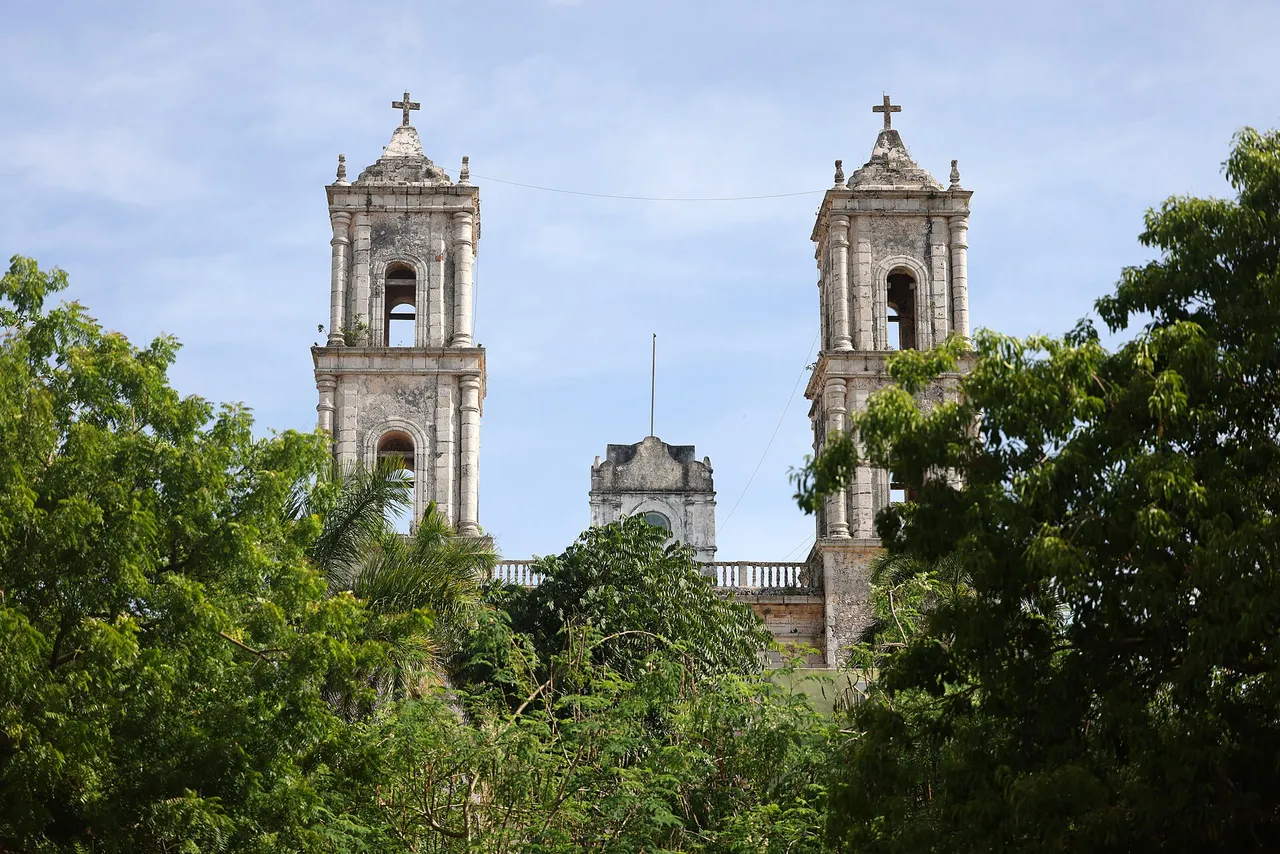
The main square is the natural starting point: benches, shade trees and, across the street, the twin-towered church of San Servacio. It's the place to get your bearings, rethink the plan over a coffee and watch the town's rhythm in the late afternoon.
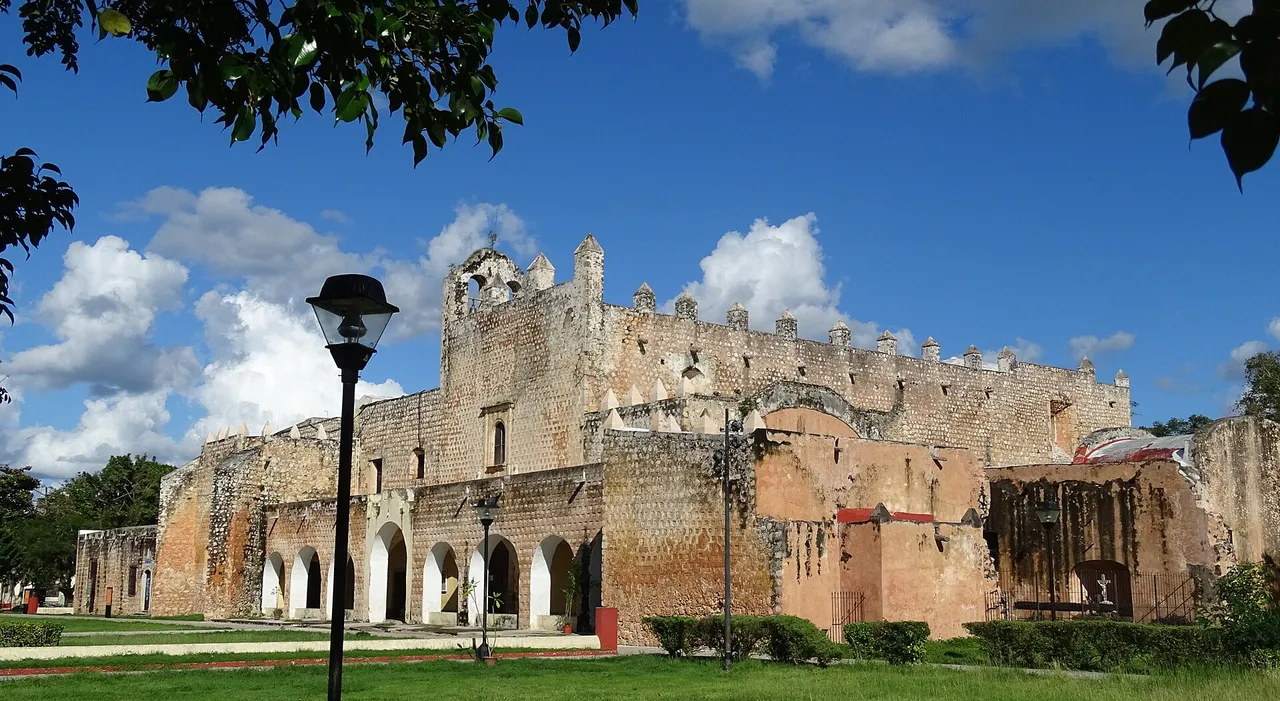
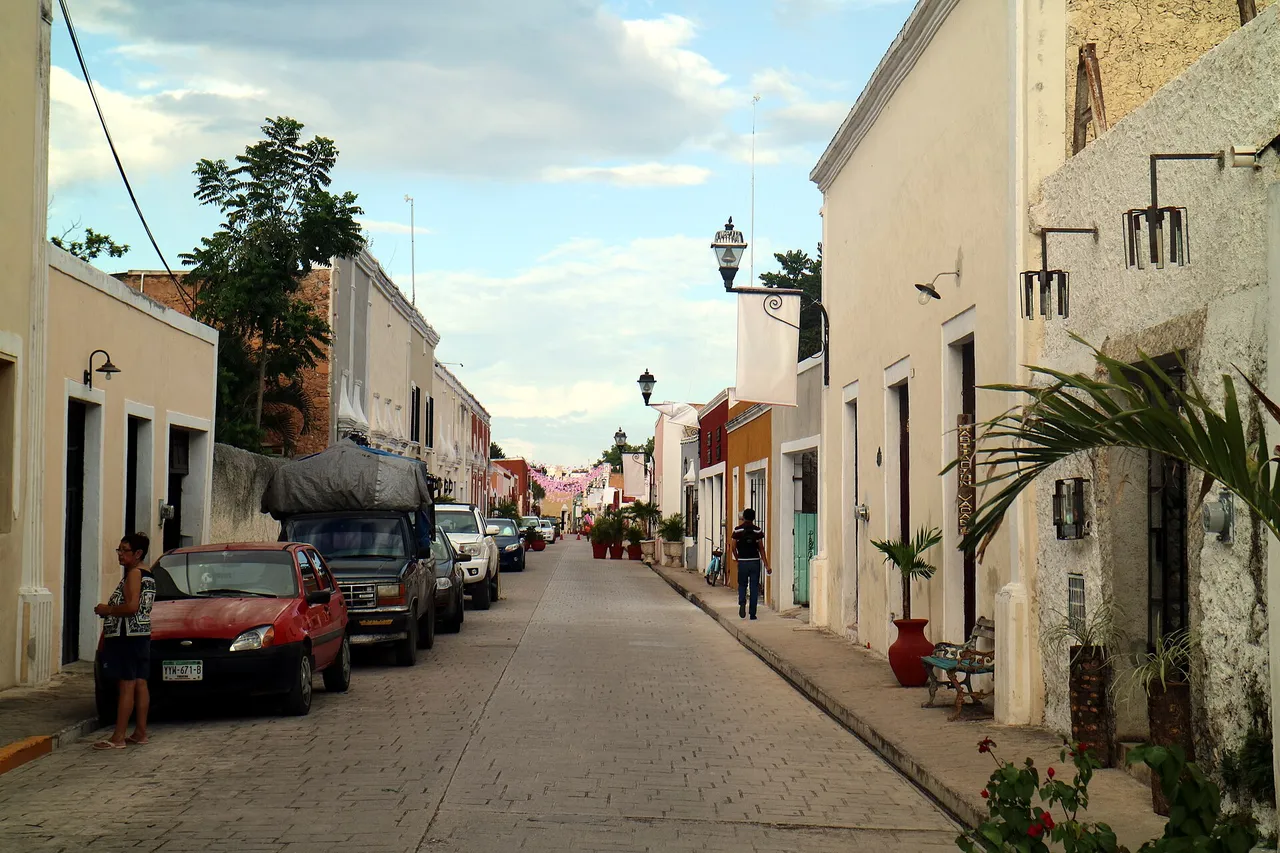
A colonial street of about 700 meters linking the center with the Sisal neighborhood, lined with brightly painted facades. At the end stands the former Convent of San Bernardino de Siena, founded around 1552, the building in the header photo. Walk it in the late afternoon as the sun drops, and stay in Sisal for the evening show.
A private home holding a private collection of Mexican folk art numbering in the thousands of pieces. Sources disagree on the exact size, and we couldn't confirm the 2026 fee or donation, so ask at the door.
A video-mapping show about the city's history is projected onto San Bernardino's facade: 21:00 in Spanish and 21:25 in English, according to Yucatán's official tourism site. That same page is inconsistent about which nights it runs, and it's cancelled when it rains. Historically it was free, but we couldn't confirm the 2026 cost: check before you go.
They're not interchangeable. Zací is a semi-open cavern in the middle of town; Oxman a deep well with a rope swing; Suytun the one from the famous photo; Ik Kil the giant next to Chichen. Most prices in this table come from 2025 and 2026 travel guides rather than official rate sheets, so treat them as ranges.
| Cenote | Where | Approx. price (adult) | Approx. hours | What it's like |
|---|---|---|---|---|
| Zací | Downtown Valladolid | MX$150 (municipal rate, January 2025) | 8:00/9:00–17:00/17:30 | Semi-open cavern, jumping platform |
| Oxman | About 4 km southwest | MX$80–150 cenote only; about MX$250 with pool and food credit | 8:00/9:00–18:00 | Deep well with roots and a rope swing |
| Saamal | About 6 km, toward Chichen | MX$200 with life jacket and locker | 9:00–17:00 | Lunch stop for many tours |
| Suytun | About 8 km east | MX$200–250 (MX$350 with buffet) | 9:00–17:00 | Cave with stone walkway and a beam of light |
| Ik Kil | Next to Chichen Itza, about 45 min | MX$180–250 (more with buffet) | 9:00–17:00 | Open sinkhole about 50 m deep |
Prices checked in October 2026 with Diario de Yucatán (Zací) and recent travel guides (the rest). Hours are Yucatán time. Almost no cenote takes cards.
It's downtown, a few blocks from the main square, and run by the town council. It's a semi-open cavern: you walk down stone steps (slippery when wet) to dark, cool water, with a platform of about 8 meters for anyone brave enough to jump. The municipal rate published in January 2025 was MX$150 for adults and MX$75 for children, with 50% off for holders of Mexico's INAPAM senior card; some 2026 blogs still quote MX$50–60, which looks outdated. Check at the ticket window. It's the pick for an afternoon without a car or a cool-down between sights.
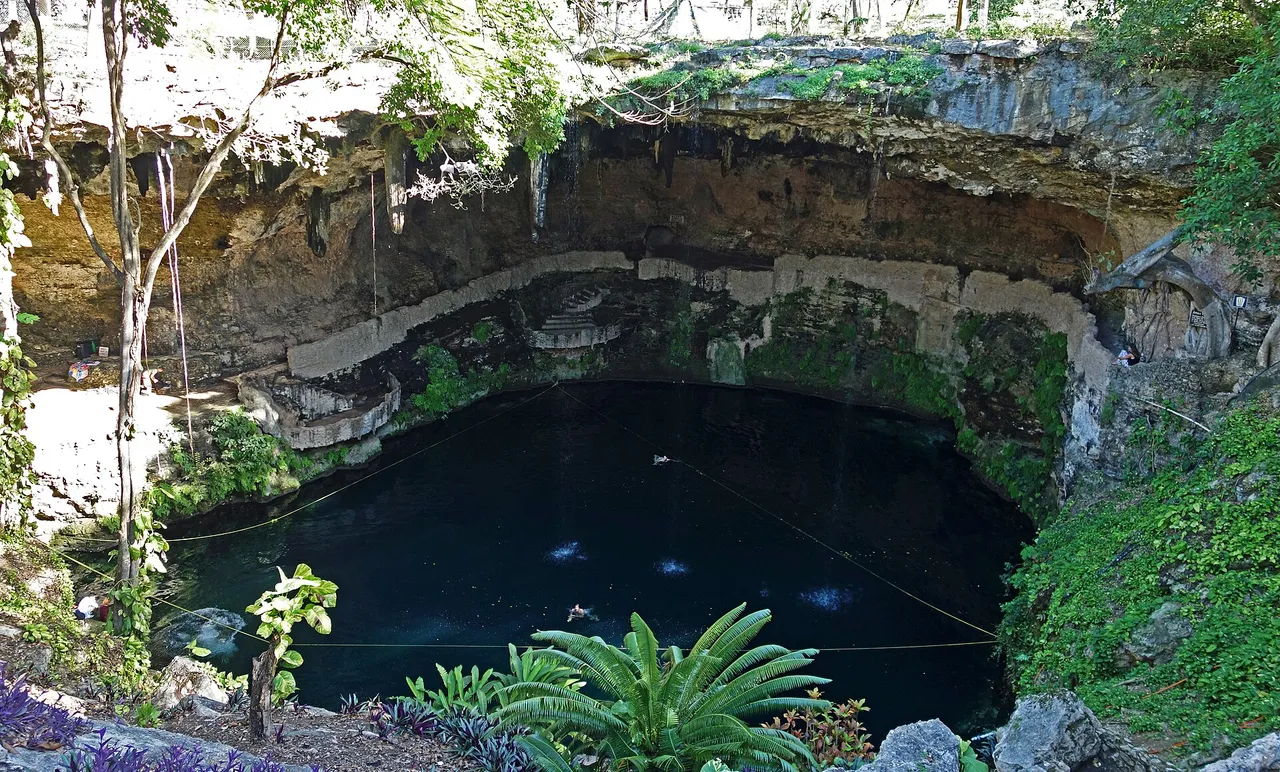
It's at Hacienda San Lorenzo Oxman, about 4 km from the center (roughly 10 minutes and MX$100 by taxi). It's a deep well with roots hanging down to the water and a rope swing to launch yourself from. A life jacket is mandatory and included, and sunscreen, repellent and makeup aren't allowed before swimming. There are two kinds of ticket: cenote only (guides quote MX$80 to MX$150) or cenote plus the hacienda pool and a food credit (about MX$250). Sources disagree on the exact amounts. Since it closes later than the others, it works well at the end of the day.
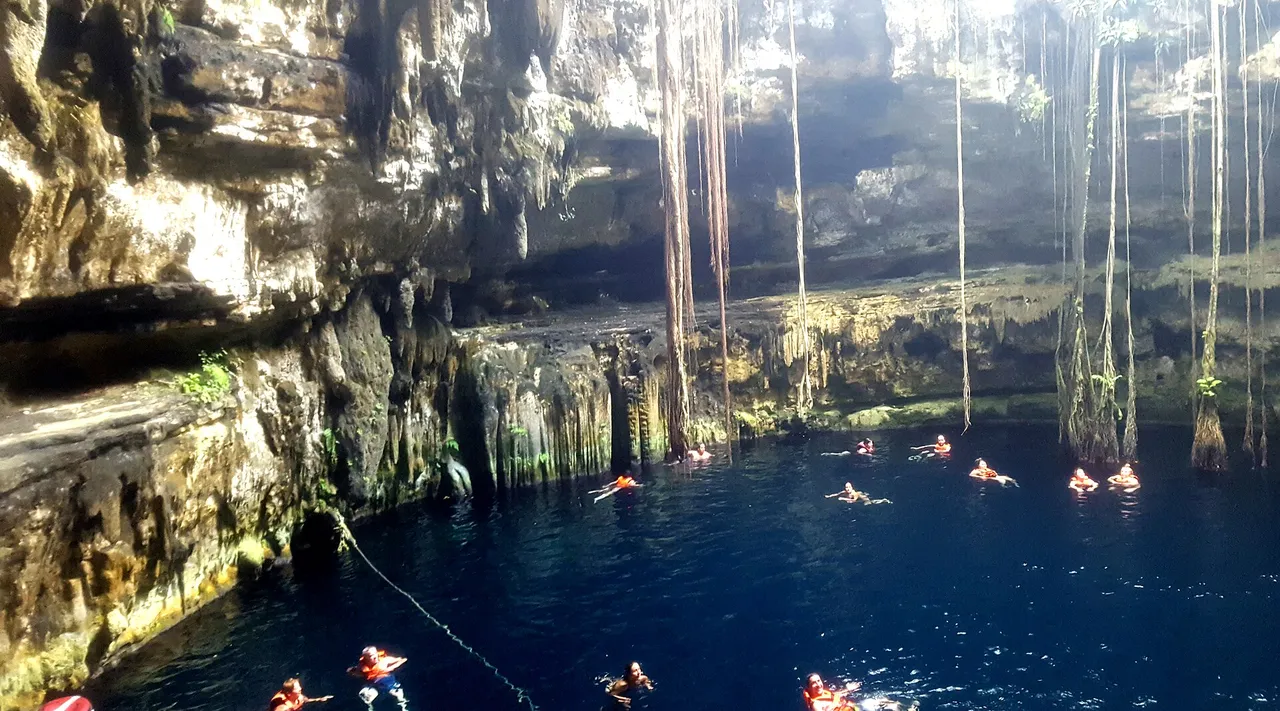
About 8 km east (15 minutes by car) is the cenote with the stone walkway leading to a round platform in the water beneath an opening in the cave roof. According to guides, the beam of light that falls on the platform is best around midday, especially from May to August. The catch: that's also when it's busiest, and there's a queue for the platform photo. You have to choose between opening time (9:00) with few people or midday with the light beam. Entry runs about MX$200–250.
Saamal, at Hacienda Selva Maya about 6 km along the road to Chichen, charges about MX$200 including life jacket and locker and is the lunch stop for many tours. Ik Kil, right by Chichen Itza, is an open sinkhole about 50 meters deep: life jacket and shower mandatory, lockers included, cash only. Both fill up between midday and 15:00 when the groups arrive; if you're on your own, go early or late.
If you're staying overnight: Suytun at 9:00, back to town for lunch, Zací after lunch and Oxman in the late afternoon. If you're coming for the day from Cancun, the time change helps: leave Cancun at 8:00 and you reach Valladolid around 9:00 local time, just as Suytun opens. Then carry on to Oxman and save Zací for just before you head back.
To compare with cenotes on the Quintana Roo side, see our pick of the best cenotes near Cancun.
About 27–30 km north of Valladolid is the alternative many people prefer to Chichen Itza: far fewer visitors (around 9,000 over the whole of Holy Week 2025, according to Riviera Maya News) and an Acropolis roughly 32 meters high and 160 long that visitors have historically been allowed to climb. We found no official confirmation that it's still open for climbing in October 2026, and INAH reported conservation work on one of its plazas in 2025, so check at the ticket window before getting your hopes up.
The highlight is halfway up: the stucco doorway shaped like a jaguar's jaws on the Sak Xok Naah, which holds the tomb of the ruler Ukit Kan Le'k Tok', flanked by winged figures. You'll also see the southern entrance arch, remains of the city wall, the Oval Palace, Las Gemelas and a ball court. Allow an hour and a half to two hours.
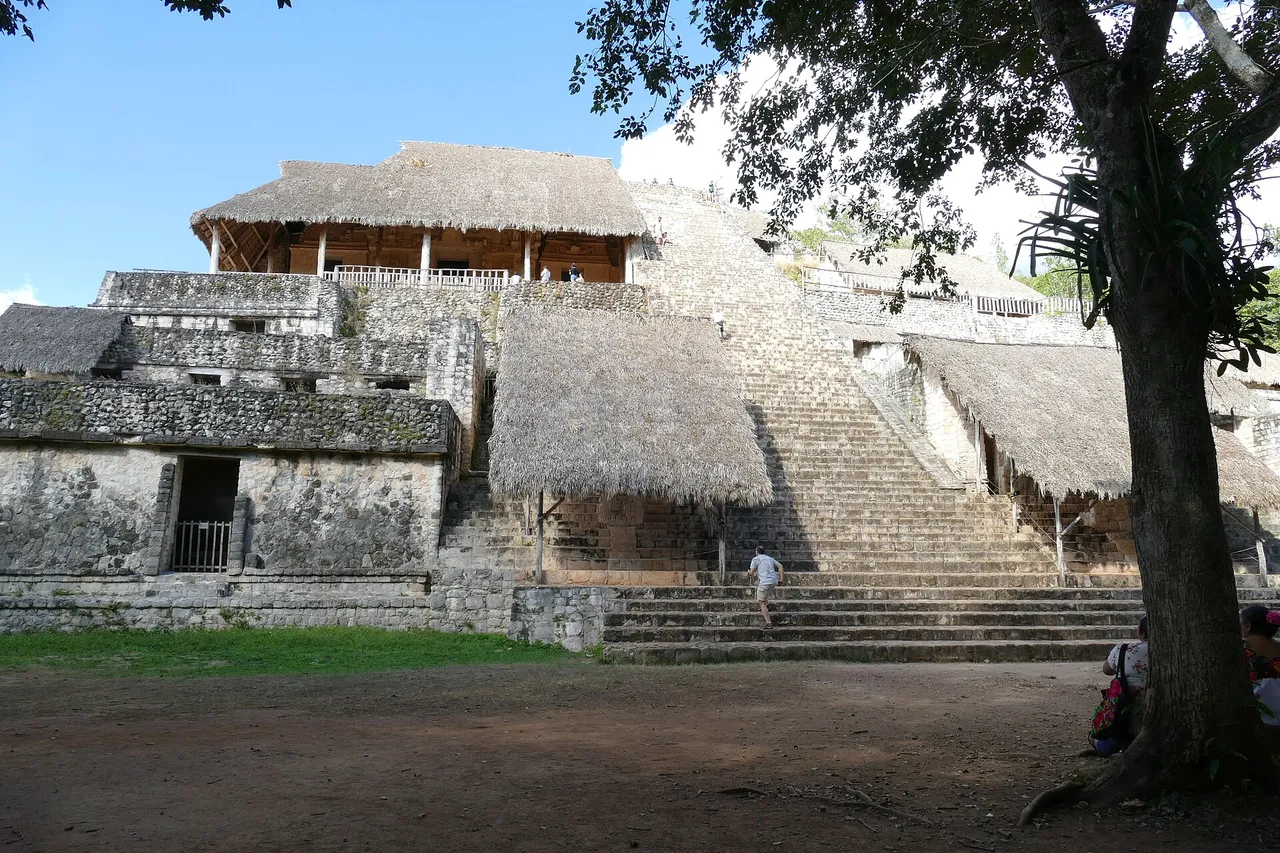
Sources disagree here. INAH's page lists a MX$210 federal fee for foreigners plus a MX$461 state fee (MX$671 in total); Por Esto reported a MX$691 total in January 2026. For Mexicans, between MX$232 and MX$237. Budget about MX$670–690 if you're a foreign visitor and MX$230–240 if you're Mexican; Yucatán residents pay only the INAH fee and Mexicans get in free on Sundays (confirm at the window). INAH lists hours of 8:00 to 16:30 with last entry at 16:00, Yucatán time; other INAH sources say it closes at 17:00, so don't arrive after 16:00. There's very little shade: go early.
About 1.5–2 km from the ruins' gate, within the Ek Balam area, is a cenote about 50 meters across and around 15 meters below ground level. You can get there by renting a bike or taking a bici-taxi from the entrance. Its price is one of the most contradictory in the region: guides publish MX$70, MX$150 or MX$170, so bring extra cash. Shower required, no sunscreen.
According to 2026 travel guides, colectivos (shared vans) leave from around Calle 44 in Valladolid (about MX$15–25, 25–30 minutes), but return vans run less often. A taxi costs about MX$100–150 each way. None of these fares are official: confirm them in Valladolid.
| Mode | Time | Approx. cost | What to know |
|---|---|---|---|
| ADO / Oriente bus | 2 to 2.5 h | MX$300–450 depending on class | Leaves from ADO Cancun Centro; frequent departures through the day |
| Tren Maya | Check timetable | Check the official site | Leaves from Cancún Aeropuerto station; Valladolid station is about 2 km from the center |
| Rental car | About 2 h | MX$427 toll each way + fuel | 180D toll highway; bring cash for the booth |
| Tour | Full day | Included in Chichen Itza tours | Valladolid is usually just a 45–60 min stop |
By bus, ADO and its Oriente line run Cancun–Valladolid many times a day from Cancun's downtown terminal. A ticket aggregator showed MX$386 as a recent fare, but we couldn't verify official 2026 prices: budget MX$300 to MX$450 depending on class. It's the most practical option if you don't drive, since the Valladolid terminal is in town.
By Tren Maya, you leave from Cancún Aeropuerto station, not downtown. Valladolid station is about 2 km north of the center; a taxi costs MX$60 to MX$150 depending on the source. We couldn't find a reliable fare for this leg, and reports conflict on which fare category foreign visitors pay: check the official Tren Maya booking site.
By car, the 180D Cancún–Mérida toll highway costs MX$427 to Valladolid since the April 2026 rate change, according to Diario de Yucatán. It's the best way to combine out-of-town cenotes and Ek Balam in a single day.
By tour, there are very few Cancun departures dedicated to Valladolid and its cenotes; most leave from Mérida. From Cancun, Valladolid shows up as a short stop on Chichen Itza tours. If the town itself is what interests you, go independently.
Once in Valladolid, the center is walkable. For Oxman or Suytun, take a taxi. Colectivos also run to Chichen Itza (about MX$35–70 according to guides; the exact departure point varies between sources).
| Item | Approx. cost 2026 |
|---|---|
| Bus Cancun–Valladolid | MX$300–450 each way |
| Toll Cancun–Valladolid (car) | MX$427 each way |
| Zací cenote | MX$150 (2025 municipal rate) |
| Suytun cenote | MX$200–250 |
| Oxman cenote | MX$80–150 · about MX$250 with pool and food credit |
| Ek Balam (foreigners / Mexicans) | MX$670–690 / MX$230–240 |
| X'Canché cenote | MX$70–170 depending on source |
| Taxi center–Oxman | About MX$100 |
Prices checked in October 2026. Toll and Ek Balam figures come from official and press sources (INAH, Diario de Yucatán, Por Esto); cenotes and taxis from recent travel guides. Bring cash.
For the rest of your luggage, see what to pack for Cancun.
Suytun at opening, Oxman before lunch and Zací in the afternoon, with the Calzada de los Frailes at sunset. If you're sleeping over, finish with the video-mapping.
Ek Balam early, X'Canché for a swim after the climb, then back to Valladolid for lunch and a dip in Zací.
Arrive in Valladolid in the afternoon, have dinner in the center, leave at 7:15 for Chichen Itza, swim at Ik Kil and head back to Cancun. With a car and two days, you can also loop Cancun → Valladolid → Cobá → Tulum → Cancun.
By ADO or Oriente bus from ADO Cancun Centro (2 to 2.5 hours, frequent departures), by Tren Maya from Cancún Aeropuerto station, or by car on the 180D toll highway, with a MX$427 toll each way.
Yes. Valladolid is in Yucatán, which is one hour behind Cancun all year: when it's 12:00 in Cancun, it's 11:00 in Valladolid. Cenote and ruin hours are given in local time.
About MX$200–250 per adult according to 2026 guides, and around MX$350 with a buffet. Bring cash.
Zací, because it's downtown and you can walk there from the main square. Oxman is about 10 minutes away by taxi.
About MX$670–690 for foreign visitors and MX$230–240 for Mexicans, combining the INAH and state fees. Official sources and the press don't agree on the exact figure, so check at the ticket window.
Traditionally yes: the Acropolis is one of the few large pyramids in the region that visitors have been allowed to climb. Confirm at the ticket window, as INAH can restrict access for conservation work.
At most of them, yes, including Ik Kil, Oxman and Saamal. They're usually included in the entry fee, though some tours charge extra.