
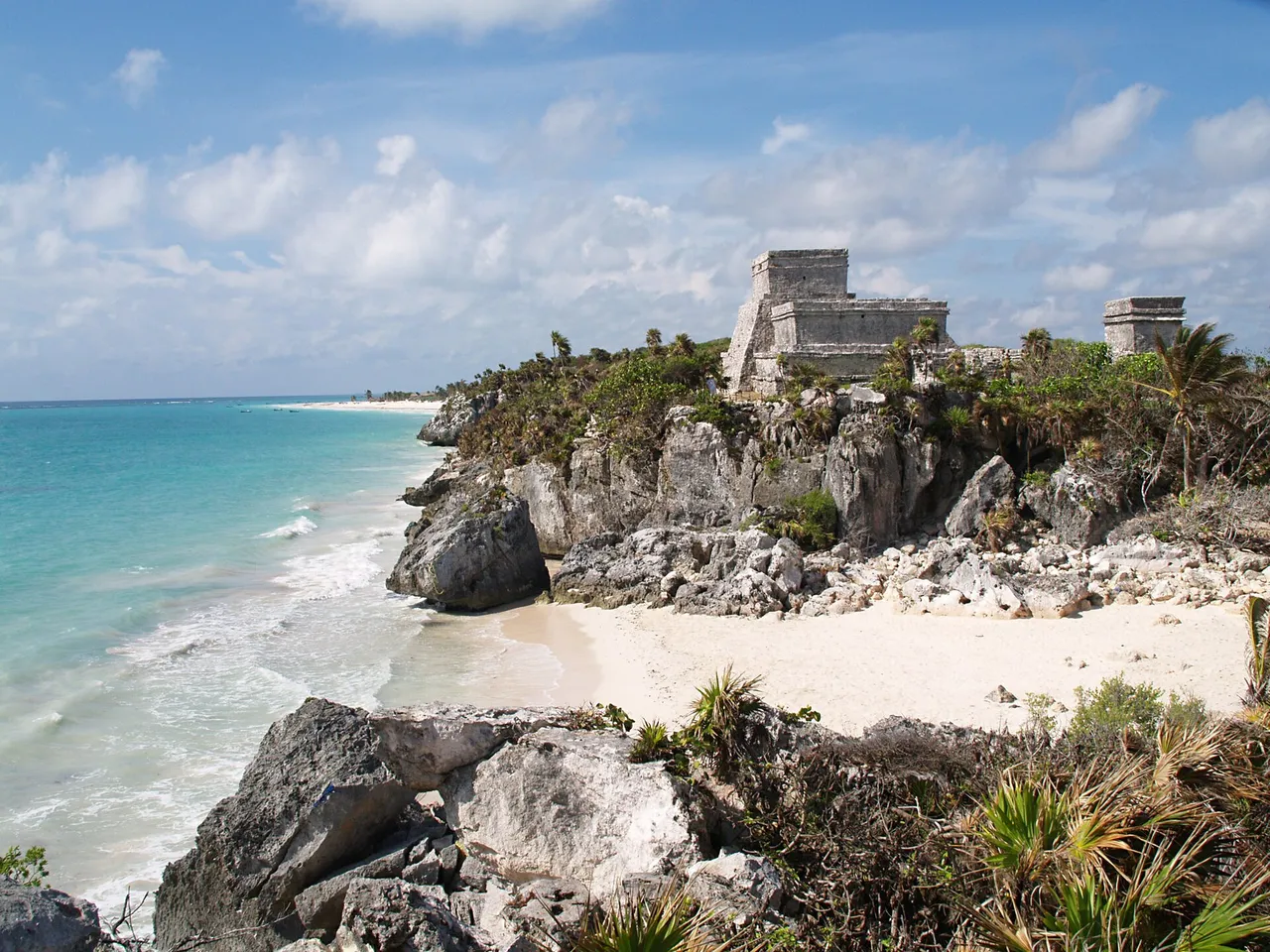
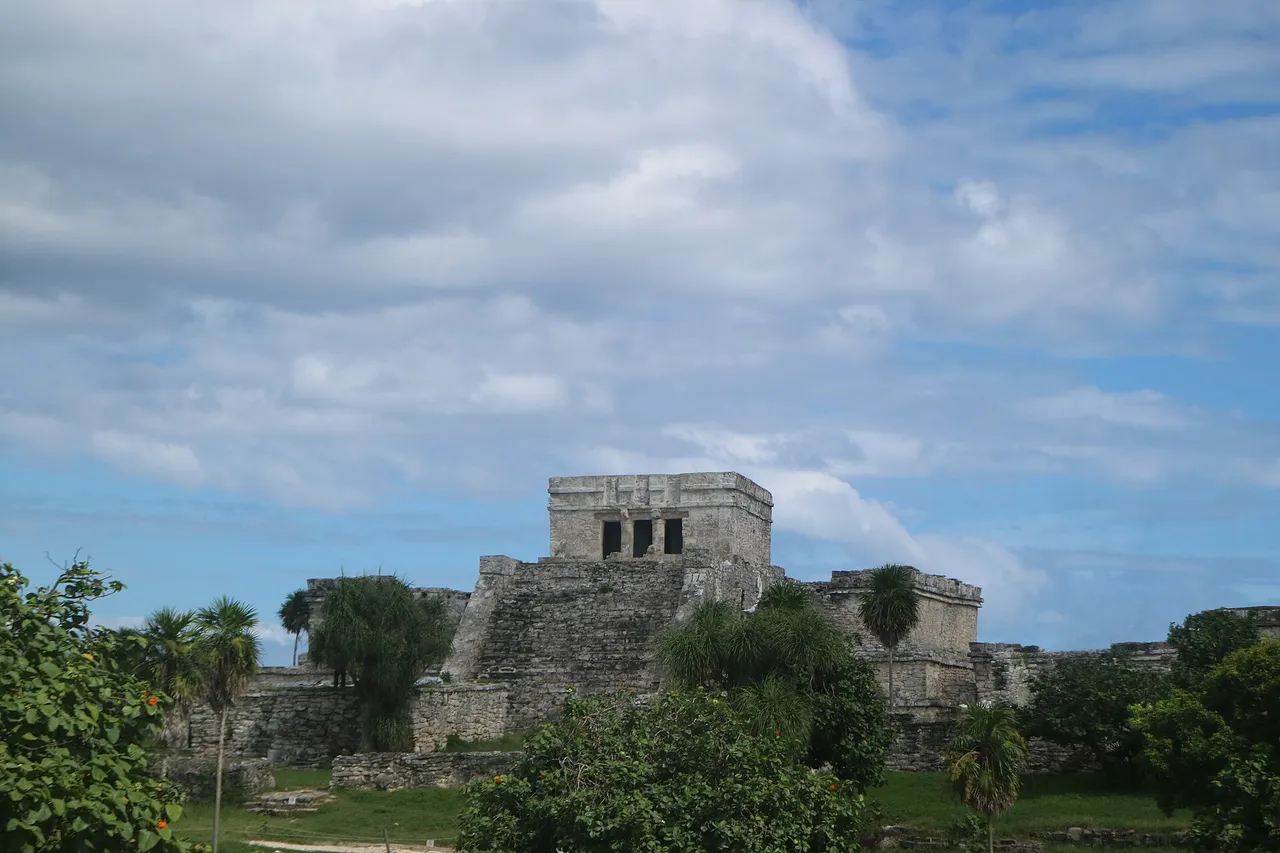
The good news for 2026: getting into Tulum's ruins now costs less than half what it did a few months ago. Since July 20 a foreign visitor pays MX$265 in total (Mexicans, MX$80), and the archaeological site is 128 km south of Cancun on highway 307, which has no tolls, in the same time zone. It's the easiest day trip from Cancun, and with your own car you can fit in Cobá too.
Photo: PhilippN · CC BY-SA 3.0
On July 17, 2026, Mexico's official gazette (the DOF) published a decree setting entry fees for Parque del Jaguar, the area surrounding the ruins. It took effect on July 20 and applies through 2026 and 2027. The result is a simpler scheme that's a lot cheaper than before:
| Item | Foreign visitors | Mexicans |
|---|---|---|
| Parque del Jaguar access | MX$100 | MX$0 |
| Tulum National Park (CONANP fee) | MX$65 | MX$30 |
| Archaeological zone (INAH fee) | MX$100 | MX$50 |
| Unified payment, national park + ruins | MX$165 | MX$80 (Mon–Sat) |
| Total to visit the ruins | MX$265 | MX$80 |
Prices checked in October 2026 against the DOF decree (July 17, 2026) and INAH's site page, updated in August 2026, which lists "unified costs" of MX$80 and MX$265.
On Sundays, Mexicans pay nothing for the national park, and the ruins are free for Mexicans and for foreigners resident in Mexico. Residents of Tulum municipality don't pay, and the usual exemptions still apply (minors, seniors, people with disabilities, students and teachers, accredited guides and neighboring Indigenous communities).
The fees are now collected by GAFSACOMM, the army-run state company that also operates the Tren Maya, under an agreement with CONANP and INAH; according to the press, INAH staff still work the booths. There's a single official window, and vendors outside have no authority to charge you anything extra or make you book a tour. If someone on the way tells you otherwise, keep walking to the window.
Watch out for old prices. Until July 19 a foreign visitor paid about MX$625 (MX$209 INAH, MX$120 CONANP and MX$295 for Parque del Jaguar), and plenty of guides and tour listings still show those figures. If a tour charges a separate "conservation fee" of several hundred pesos, ask whether it's been updated. And if one article says "MX$165" and another "MX$265," both are right: 165 is the decree's unified payment and 265 is what a foreign tourist pays in total once the Parque del Jaguar fee is added.
We couldn't confirm whether the new window takes cards, so bring cash as well as a card. Inside Parque del Jaguar there's an electric shuttle for MX$20.
Tulum was a walled city on the sea, and that mix of wall, temples and turquoise Caribbean is what sets it apart from every other archaeological site in the region. It's been protected as a monuments zone since 1993, and Tulum National Park dates from 1981. It's small: an hour and a half to two hours is enough to see it at an easy pace.
Precisely because it's small, it fills up fast. Tour coaches from Cancun and Playa del Carmen start arriving around 10:00, and by mid-morning the site is congested. Sundays are among the busiest days because Mexicans get in free. Arrive at the 8:00 opening and you'll get an hour or two of soft light, less heat and photos without crowds.
Watch the clock: last entry is at 15:30, earlier than at Chichen Itza or Cobá. If you're planning an afternoon visit, don't leave it for the end of the day.
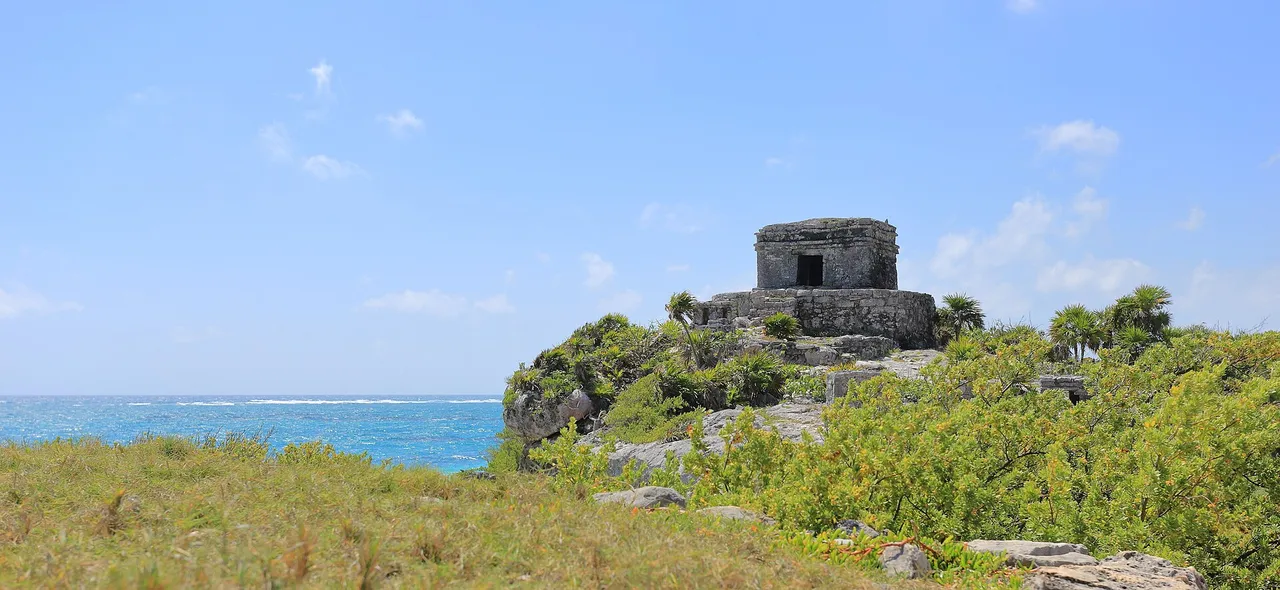
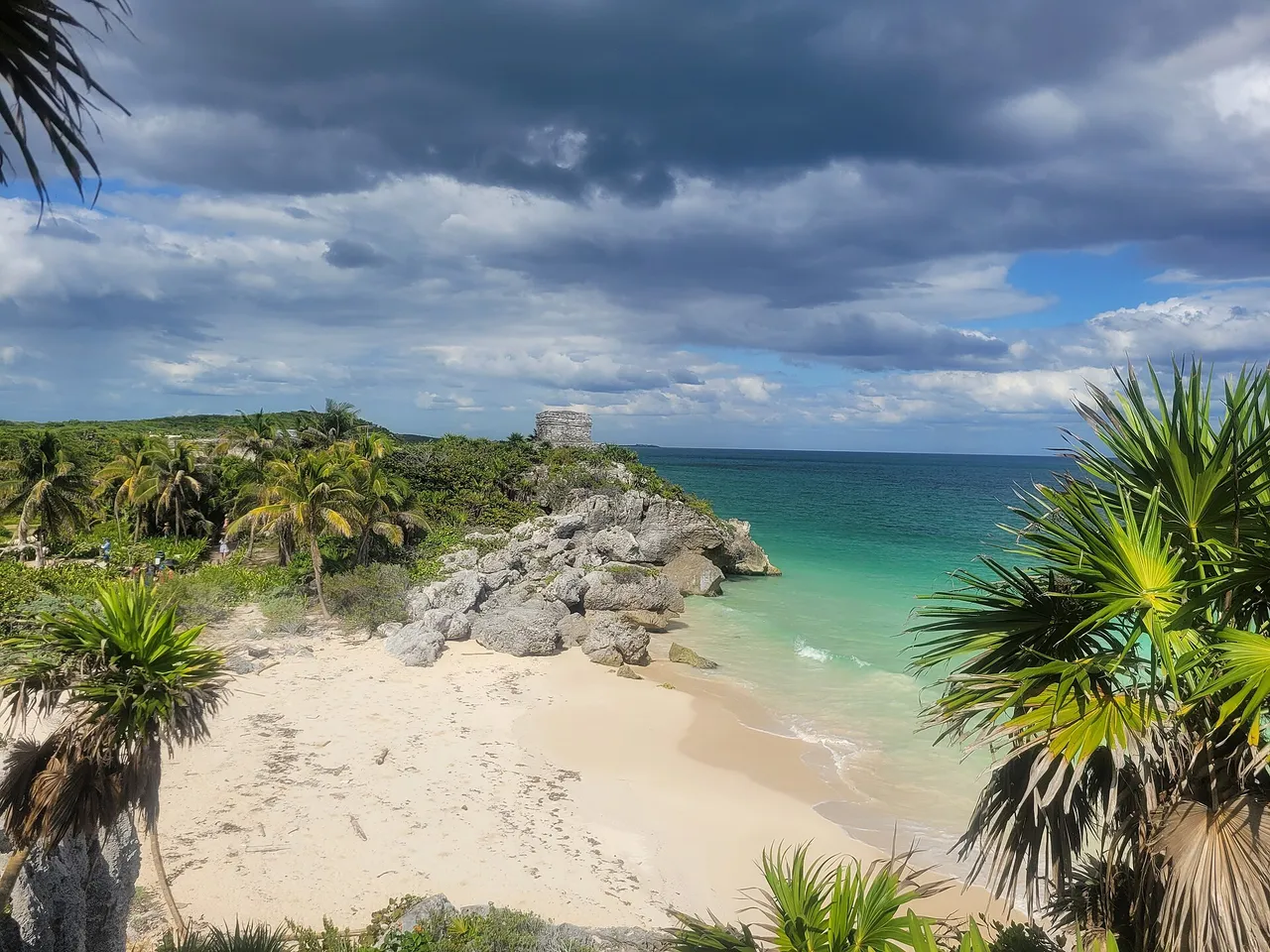
From the archaeological site a steep wooden staircase leads down to the beach. Swimming is customarily allowed in flagged areas, and there are lifeguards on the main stretches. That access can close for sea-turtle nesting, rough water or sargassum, and there's no way to know for sure until the day itself.
Down there you'll find no services and no shade: bring your own water and something to cover up. The sea tends to be calmer from May to September; from October to April there are stronger currents and northerly fronts (nortes). Before you go, check our sargassum forecast and the region's live sea conditions.
Plenty of people arrive thinking Tulum is a town with ruins on the beach, and are surprised to find three separate areas. It pays to know which one you're heading to before you get off the bus.
The archaeological site sits inside Parque del Jaguar, to the north. Driving inside the park is restricted: you can only drive in if you have a reservation at a restaurant or beach club. Otherwise, park at the museum and take the MX$20 electric shuttle. Information on parking near the ruins conflicts: some guides describe a lot about a kilometer from the entrance, with a 15-minute walk or a shuttle, while others mention private lots by the highway at MX$150–250. There's no confirmed rate for 2026.
Tulum Centro lies along highway 307, with the ADO terminal on Av. Tulum between Júpiter and Alfa Norte. Colectivos to Cobá leave from here, and it's the logical base if you're traveling without a car and want to stay in Tulum.
To the south runs the beach strip with hotels and clubs. Under the federal Tulum Renace plan, Mexico's tourism ministry reported 10 free public beach accesses open by July 2026, including the traditional access inside Parque del Jaguar, Playa Conchitas (km 4.5) and Playa del Pueblo (km 5.5). Playa Pescadores is also public. If you want a beach afternoon after the ruins, these are your free-access options.
| Option | Time | Approx. cost | Honest note |
|---|---|---|---|
| ADO to "Tulum Ruinas" | About 2 h 25 min | MX$275–290 from downtown · about MX$475 from the airport | Dozens of departures a day; best option without a car |
| Colectivo via Playa del Carmen | About 3 h | About MX$95 in total | No direct service: you change in Playa del Carmen |
| Tren Maya | Check timetable | Check the official site | Tulum station is several km from the ruins |
| Rental car | About 2 h | Just fuel and parking | Highway 307 is free; Playa del Carmen is the bottleneck |
| Tulum + Cobá + cenote tour | Full day | US$40–110 per person | Check whether entry fees are included and up to date |
Buses leave from the ADO Cancun Centro terminal and from the airport, with dozens of departures a day: one ticket site lists 37 daily departures in the Tulum–Cancun direction, from 00:25 to 22:20. The trick is where you get off. If you're going straight to the ruins, ask for the "Tulum Ruinas" (or "Zona Arqueológica") stop on highway 307, about 2 h 25 min out; riding on to Tulum Centro adds 15 to 25 minutes. Based on December 2025 data, tickets run about MX$275–290 from downtown and MX$475 from the airport, but we couldn't verify the official 2026 fare: check ado.com.mx. A new ADO terminal next to the archaeological site was due to open in September 2026, but we couldn't confirm it's operating yet.
There's no direct Cancun–Tulum colectivo. The budget route is Cancun → Playa del Carmen (about MX$45–55, departures roughly every 15 minutes) and then Playa del Carmen → Tulum (about MX$50). That's around MX$95 and three hours in total, and you can ask the driver to drop you near the ruins. Fares as reported by travel guides in late 2025.
There are stations at Playa del Carmen, Tulum and Tulum Aeropuerto, but Tulum station is several kilometers from the ruins, so you'll need a taxi or colectivo for the last stretch. Fares quoted in the press disagree on which category a foreign visitor pays, so we'd rather not publish a figure: check the official booking site before you buy.
Federal highway 307 is toll-free and mostly four lanes. Traffic jams up through Playa del Carmen, and police and military checkpoints are routine: keep your license and the rental papers handy. It's the best option if you want to add Cobá. If you're heading straight from your flight, our guide to Cancun airport transportation compares the options.
Cancun's classic "4-in-1" combines Tulum, Cobá, a cenote and sometimes Playa del Carmen. Shared tours run from about US$40 to US$110 per person; the cheapest usually exclude entry fees, and some listings still show pre-July 2026 fees. A private tour can run to US$900 or more per group. Before booking, read which Cancun tours are worth it.
Cobá is about 45 km northwest of Tulum on highway 109, roughly 45 minutes by car, and it's the perfect counterpoint: if Tulum is sea and cliffs, Cobá is jungle, a lagoon and ancient Maya causeways (sacbés). At its height, between the years 200 and 600, the city covered about 70 km² and had around 50,000 inhabitants, according to INAH's head of the site.
Its main pyramid, Nohoch Mul, is 42 meters tall, the highest in the northern Maya area. It was closed to climbing from 2019 and reopened in early December 2025 with a wooden staircase built over the original steps by ejido members from Noh Bec, an investment of about MX$5 million, according to INAH's bulletin. According to 2026 travel guides, climbing runs roughly 8:00 to 15:30, in groups of up to 15 with about 15 minutes at the top; that's not a published official rule, so confirm on arrival. If a guide or blog tells you it's closed, the information predates December 2025.
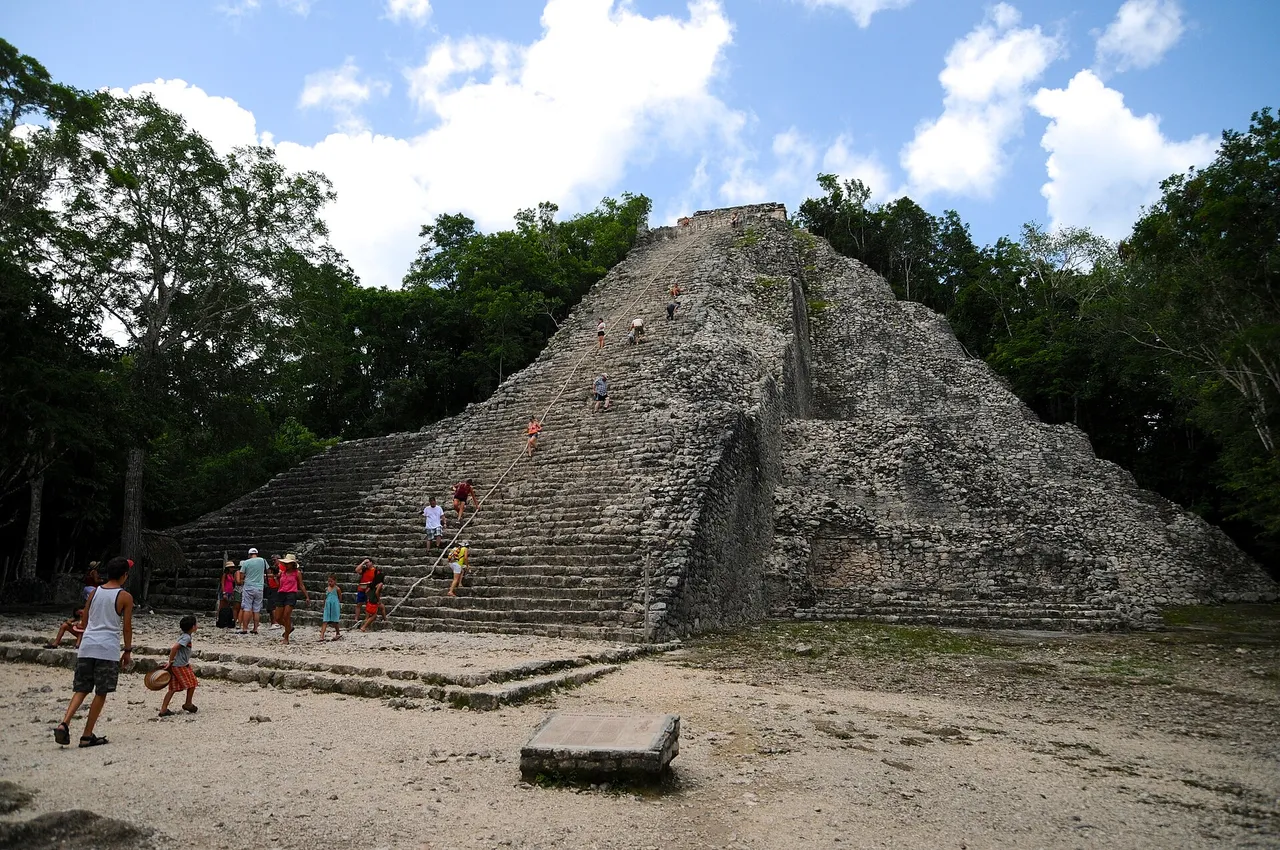
According to INAH, the federal fee is MX$210 for foreign visitors and MX$105 for Mexicans and foreign residents, and on Sundays that INAH portion is free for nationals and residents. On top of that there's an ejido (community) fee whose amount we couldn't confirm; one 2026 guide reports a total of around MX$330 for foreigners, so bring a bit more cash than you think you'll need. It's open 8:00 to 17:00, with last entry at 16:00.
The site is big: the main groups are about 2 km apart. That's why almost everyone rents a bike at the entrance (about MX$80) or takes a bici-taxi (about MX$140); parking is around MX$80. These are figures reported by travel guides, paid in cash. Besides Nohoch Mul, don't miss the Cobá Group by the lagoon, the ball courts and the Conjunto de las Pinturas.
Cobá at 8:00, Tulum afterwards: you climb the pyramid in cooler air with a shorter line and reach Tulum around 13:00. The risk is the clock: if you linger, Tulum's 15:30 last entry comes fast. Tulum at 8:00, Cobá afterwards: you see the coastal ruins without crowds and reach Cobá late morning or around midday, with time to climb before 15:30. Without a car, the second option is easier to piece together.
According to 2026 guides, colectivos leave Tulum (Av. Tulum at Calle Osiris) for about MX$70, every 15–20 minutes in the morning, and take around 45 minutes; there's also a second-class Mayab bus around 7:20 from Tulum's ADO terminal (about MX$50), and a taxi costs around MX$450 each way. We couldn't confirm whether a direct ADO from Cancun to Cobá exists. Near Cobá there are cenotes such as Choo-Ha, Tamcach-Ha and Multum-Ha for an afternoon swim; their current prices aren't verified.
| Item | Foreign visitors | Mexicans |
|---|---|---|
| Tulum ruins (total) | MX$265 | MX$80 Mon–Sat · free Sunday |
| Parque del Jaguar electric shuttle | MX$20 | MX$20 |
| Cobá, INAH fee | MX$210 | MX$105 |
| Cobá, ejido fee | Amount unconfirmed (reported total about MX$330 for foreigners) | |
| Bike / bici-taxi at Cobá | About MX$80 / MX$140 | |
| ADO Cancun Centro → Tulum | About MX$275–290 each way | |
| Tolls | MX$0: highway 307 is free | |
Prices checked in October 2026. Tulum: DOF decree and INAH. Cobá: INAH (federal fee) and travel guides (ejido, bikes). ADO: December 2025 data, check ado.com.mx.
For the rest of your luggage, see our Cancun packing list.
Since July 20, 2026, MX$265 for foreign visitors: MX$165 for the unified national park and ruins payment plus MX$100 for Parque del Jaguar. Mexicans pay MX$80 Monday to Saturday and nothing on Sundays. The source is the decree published in the DOF on July 17, 2026.
Because that was the rate before July 20, 2026, when Parque del Jaguar charged foreigners MX$295. That figure no longer applies.
8:00 to 17:00, with last entry at 15:30. Cobá is open 8:00 to 17:00 with last entry at 16:00. Both run on the same time as Cancun.
Usually yes, in flagged areas, down a steep staircase. Access can close for turtle nesting, rough seas or sargassum, so check on the day.
Yes, again since December 2025, via a new wooden staircase and in small groups. According to travel guides, climbing runs until about 15:30.
No. Federal highway 307 is toll-free the whole way.
Take ADO from Cancun Centro or the airport, with very frequent departures. It's about two and a half hours; get off at the "Tulum Ruinas" stop if you're going straight to the archaeological site.