
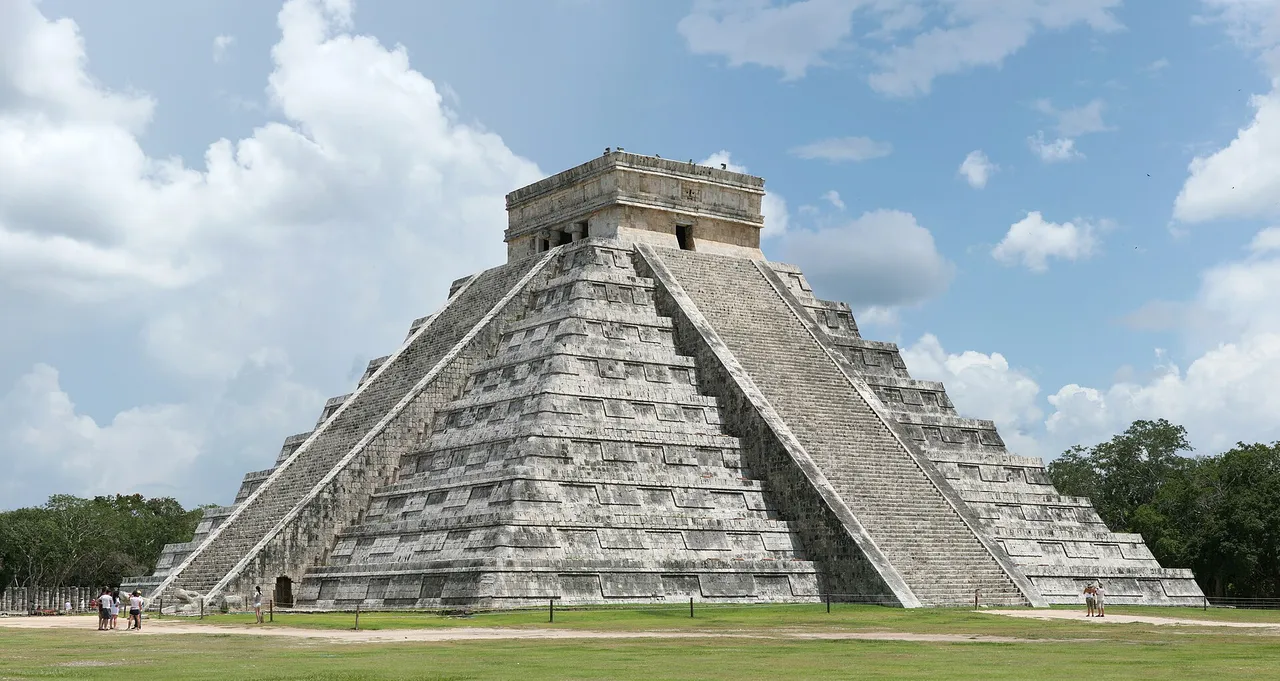
Chichen Itza, the great Maya city of northern Yucatán, sits about 200 km from Cancun, roughly two and a half hours by car on the 180D toll highway. In 2026 entry costs MX$697 for foreign visitors and MX$310 for Mexicans, and yes, it works as a day trip, though a long one: 11 to 13 hours door to door. What shapes your visit most isn't how you get there, it's what time you walk through the gate.
Photo: Daniel Schwen · CC BY-SA 4.0
This is the detail that wrecks the most plans, and hardly any brochure mentions it. Cancun, in Quintana Roo, runs on Mexico's Southeast Zone time (UTC-5). Chichen Itza, like Valladolid and Ek Balam, is in the state of Yucatán, which uses UTC-6. Since Mexico scrapped daylight saving time in 2022, the gap is the same all year: when it's 10:00 in Cancun, it's 9:00 at Chichen Itza.
The site's official hours are given in Yucatán time. ADO buses and many tour operators, on the other hand, often quote Cancun time. So a tour that "arrives at 11:00" may be arriving at 10:00 local time, and a return bus "at 16:30" can mean two different moments depending on who tells you. Always ask: Cancun time or Yucatán time?
| At the site | Yucatán time | Same moment in Cancun |
|---|---|---|
| Ticket windows open | 8:00 | 9:00 |
| Last entry | 16:00 | 17:00 |
| Staff start clearing the site | 16:30 | 17:30 |
| Closing | 17:00 | 18:00 |
Your phone usually switches on its own once it picks up a Yucatán cell tower; your rental car's clock and your watch won't. In 2025 there was a proposal for Yucatán to match Quintana Roo's time, but as of October 2026 we found no approved change, so check your phone once you cross the state line.
Most tour coaches from Cancun and the Riviera Maya roll into Chichen Itza mid-morning. Get in at 8:00 local time and you'll have an hour or two of quiet plaza and bearable temperatures; show up at 11:00 and you'll find lines, several guided groups talking over each other in front of El Castillo, and the sun almost straight overhead.
This is where the time change works in your favor. Leave Cancun at 6:00, drive two and a half hours, and you arrive at 8:30 Cancun time, which is 7:30 at Chichen Itza: half an hour before opening. Add the time it takes to get out of the Hotel Zone if you're staying there. The more relaxed option is to spend the night before in Valladolid, about 45 minutes away, and leave around 7:15 local time.
The big plazas have almost no shade, and the full loop means two to three hours on foot over open ground. To compare months, see our guide to the best time to visit Cancun.
There's no single best choice. A tour handles the logistics but drops you at the site at peak time; a car is the only way to make opening without sleeping elsewhere; the ADO is cheapest but its schedule is very limited.
| Option | Approx. cost | Pros | Cons |
|---|---|---|---|
| Shared tour | US$49–110 per person, entry almost always extra | Hotel pickup, guide, lunch and a cenote stop | You arrive mid-morning with everyone else |
| Private tour | US$220–320 per vehicle (up to 4 people, driver only) | You choose the departure time | Prices vary widely between agencies |
| Direct ADO bus | About MX$400–500 each way | Cheap, drops you at the site | Only one direct departure a day, around 8:45 |
| Tren Maya | MX$335–351 reported in 2026 (fare category unclear) | Comfortable, no driving | Leaves from the airport station; last leg is up to you |
| Rental car | Tolls about MX$500–550 each way + MX$124 parking + fuel | You're in at 8:00 and set your own pace | About 5 hours of driving round trip |
Shared tours usually include hotel pickup, an air-conditioned coach, a guide, a buffet lunch, a cenote stop (Saamal, Ik Kil or Suytun, depending on the operator) and often a short stop in Valladolid. Read the fine print: most don't include the archaeological site fee, and the cenote life jacket may cost extra (around US$5). Schedules vary a lot between agencies, but expect a very early start and a return after dark; confirm when you book. Before paying, check our take on which Cancun tours are worth it.
Buses leave from the ADO Cancun Centro terminal, around Av. Tulum and Av. Uxmal. In practice there's a single direct morning departure, around 8:45, reaching the Chichen Itza stop at about 11:10 local time: right when heat and crowds peak. Other departures involve changing buses in Valladolid or Mérida. For the return, some sources say 16:00 and others 16:30, so confirm on ado.com.mx before you go; some afternoons you can wait an hour or two. From the Hotel Zone, city buses along Blvd. Kukulcán or a taxi will get you to ADO Centro. Fares run about MX$400–500 each way, but we couldn't verify the official 2026 price.
The train leaves from Cancún Aeropuerto station, next to the airport rather than downtown or in the Hotel Zone, so you'll need a taxi there first. Chichén Itzá station serves the archaeological site, the museum and the town of Pisté, but we couldn't confirm the exact distance to the entrance or the cost of the transfer: plan on a taxi or local shuttle. Mexican media reported fares of MX$335 to MX$351 in 2026 without specifying the category, and reports conflict on whether a separate foreigner fare still exists. Check times and prices on the official Tren Maya booking site before you buy.
This is the Cancún–Mérida toll road; take the Chichén Itzá / Pisté exit. The Cancún–Valladolid section costs MX$427 for cars since the April 13, 2026 rate change, according to Diario de Yucatán, and you pay part of the next section to reach the Chichen exit: figure about MX$500–550 each way. Bring cash, since cards aren't guaranteed at the toll booths. There's a free road, MEX-180, but it runs through many villages with speed bumps (topes) and is much slower. Parking at Chichen Itza costs MX$124 per car or van since May 1, 2026 (MX$199 for a Sprinter).
According to INAH's official page, the ticket combines the federal INAH fee (MX$105) and a Yucatán state fee. Since March 27, 2026 both are paid together at a single window, the so-called Boleto Único, inside the CATVI visitor center, which is now the only way into the site. Before that you had to queue twice.
| Item | 2026 price |
|---|---|
| Entry, foreign visitors | MX$697 (105 INAH + 592 state) |
| Entry, Mexican nationals | MX$310 (105 INAH + 205 state) |
| Yucatán residents | MX$105 (INAH fee only) |
| Sundays | Free for Mexicans and foreign residents; foreign tourists pay full price |
| Parking | MX$124 car or van · MX$199 Sprinter |
| Tolls Cancun → Chichen exit | About MX$500–550 each way |
| ADO Cancun → Chichen | About MX$400–500 each way (check ado.com.mx) |
| Shared tour | US$49–110 per person, usually without entry |
Prices checked in October 2026 against INAH's page, Diario de Yucatán and Xataka México. Fees are paid at the site's ticket window; INAH doesn't sell tickets online.
If you see MX$676 quoted online for foreigners, that's the January 2026 figure, since superseded. With valid ID, INAH waives its own fee for children under 13, adults over 60, retirees, people with disabilities, students and teachers, among others; it's not clear that the state portion is also waived for foreign tourists, so ask at the window. We also found no official confirmation that the CATVI takes cards: carry pesos as a backup.
Noches de Kukulkán, the sound-and-light show, has been suspended since early October 2026 for equipment maintenance, with no announced return date. When it runs, tickets are sold only on its official website. If a tour offers it as included, ask how they plan to make that happen.
From May 19 to 31, 2026 the site closed over a dispute with Pisté artisans and vendors about their relocation to the CATVI, reopening on June 1. It's not the norm, but it's worth checking local news the day before, especially if you're going independently.
Two and a half to three hours covers the main sights without rushing. A route that avoids backtracking: head straight for El Castillo (the Temple of Kukulcán) while the Great Plaza is still quiet. Many visitors clap in front of its staircase to hear the sharp echo that bounces off the steps, an acoustic quirk often likened to a bird's call.
Next comes the Great Ball Court, often cited as the largest in Mesoamerica; look for the stone rings high on the walls. On the way out you pass the Tzompantli, the skull platform, and the Platform of Venus. Then cross to the Temple of the Warriors and the Group of a Thousand Columns.
Head back north along the sacbé, the old white causeway, to the Sacred Cenote. Leave the southern section for last: El Caracol, the round-towered observatory, and the Las Monjas complex. Save some water for this final stretch; it's the part you'll do in the most heat.
For the rest of your suitcase, our Cancun packing list covers clothes and footwear for the peninsula's climate.
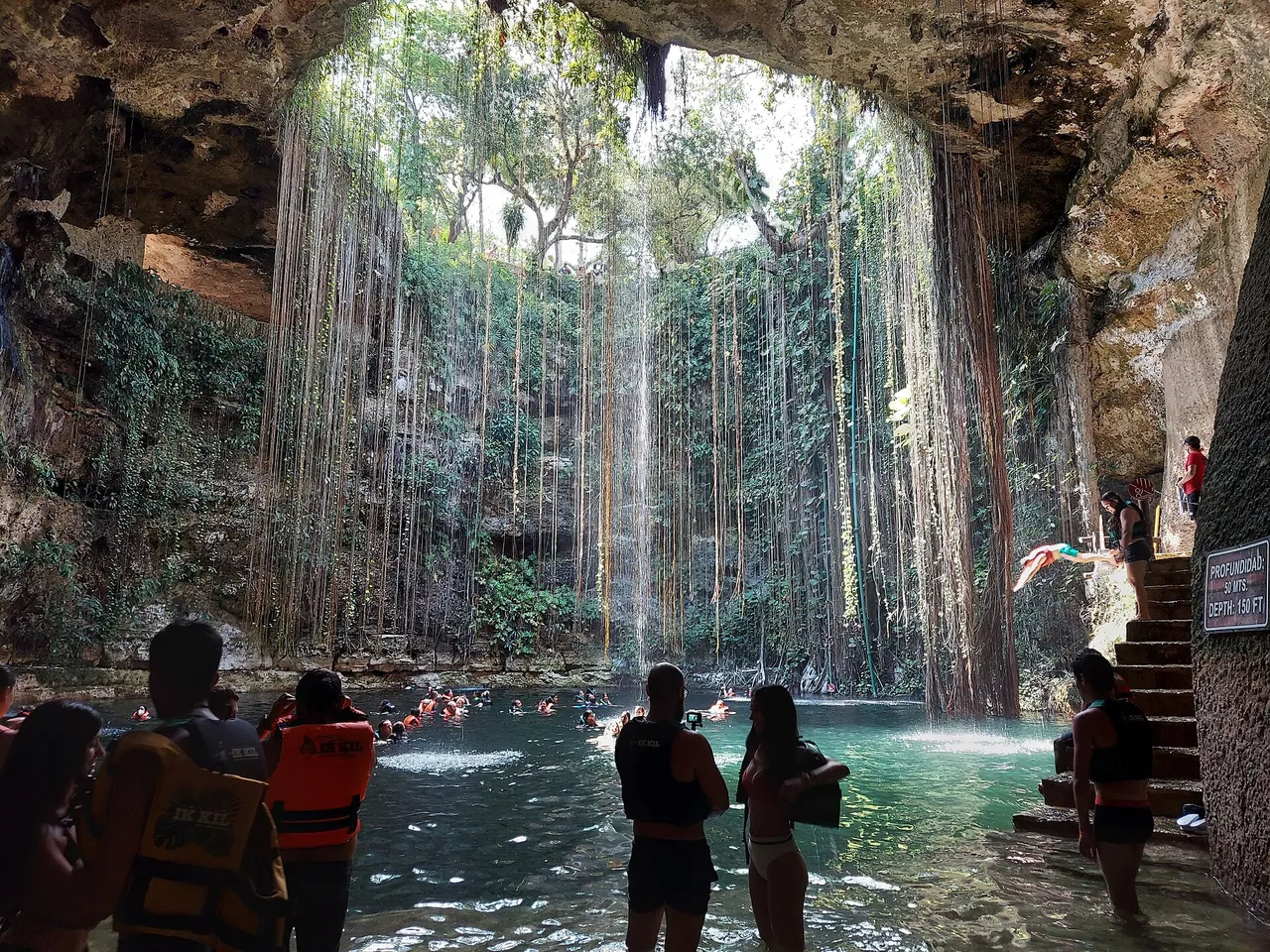
The closest cenote and the tour classic: an open sinkhole about 50 meters deep with roots hanging down to the water. Entry runs MX$180 to MX$250 depending on the option (more with a buffet) and is paid in cash. A life jacket and a shower beforehand are mandatory. Between midday and 15:00 it fills with groups coming from Chichen; go at opening or after 15:00. Our guide to the best cenotes near Cancun compares it with others.
Sleeping in Valladolid is the simplest way to be at Chichen by 8:00. It also has a cenote right in town and, at night, a video-mapping show on the facade of the San Bernardino convent. It's all in our Valladolid and cenotes guide.
Ek Balam is about 30 km north of Valladolid and can be added the same day by car. Note that its last entry is 16:00, also on Yucatán time.
Day 1: leave Cancun after lunch, reach Valladolid in the afternoon and have dinner in the center. Day 2: leave at 7:15 local time, enter Chichen Itza at 8:00, finish around 11:00, swim at Ik Kil or Saamal and drive back to Cancun on the toll road. You'll be back for dinner, and remember the clock jumps forward an hour when you cross into Quintana Roo.
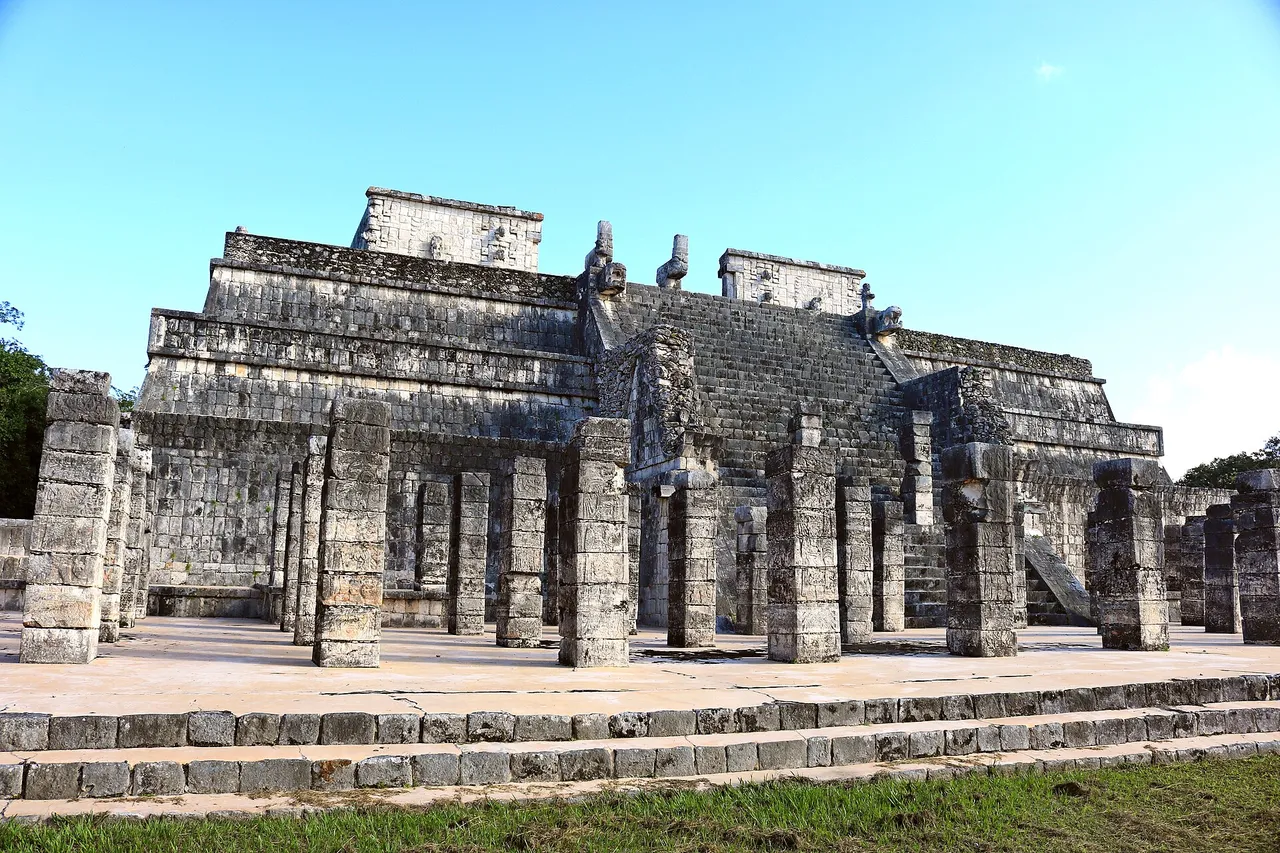
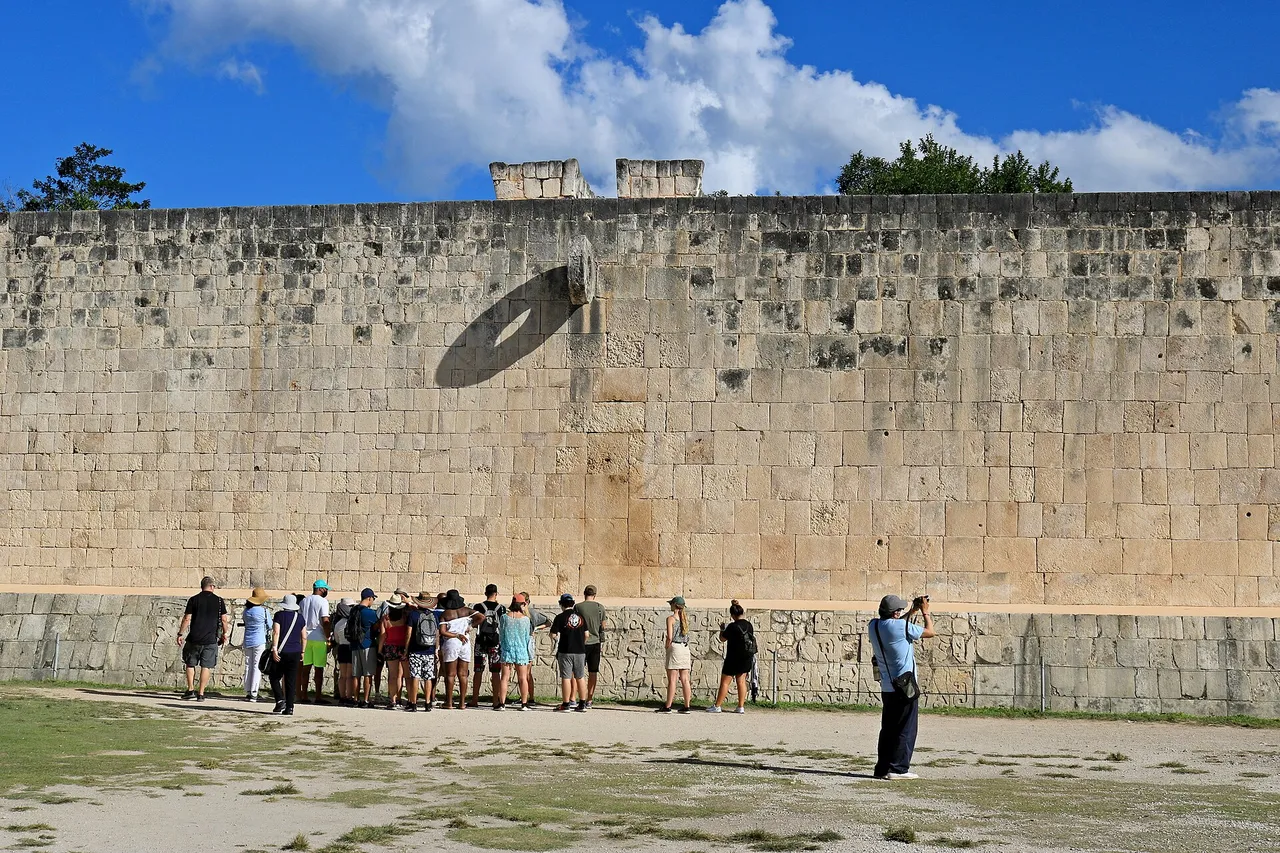
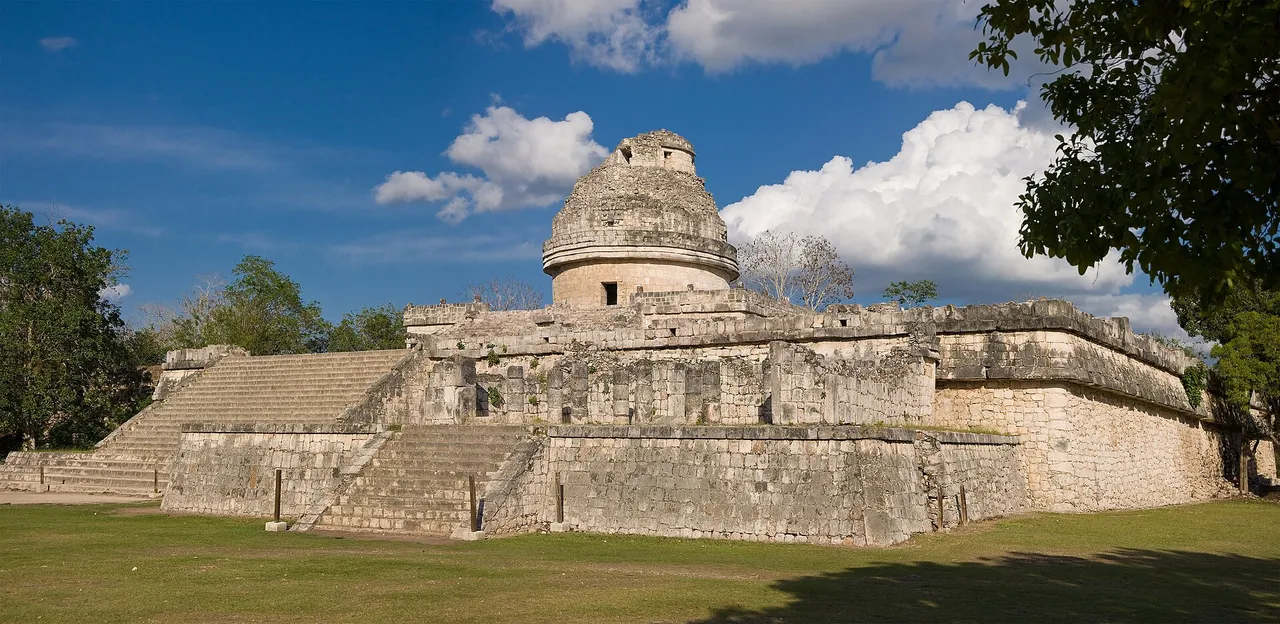
MX$697 for foreign visitors (MX$105 INAH plus MX$592 state fee), MX$310 for Mexican nationals and MX$105 for Yucatán residents. Since March 27, 2026 it's all paid at a single CATVI window. On Sundays Mexicans and foreign residents get in free.
No. Climbing El Castillo has been banned since 2006, INAH widened the roped perimeter in 2025, and anyone who crosses it is escorted out and can be fined.
Daily from 8:00 to 17:00 with last entry at 16:00, Yucatán time. In Cancun time that's 9:00 to 18:00, with last entry at 17:00.
About two and a half hours by car on the 180D toll highway from downtown Cancun. The morning direct ADO bus takes just under two and a half hours of actual travel, though the ticket makes it look longer because of the time change.
Yes, but in practice it's a single direct departure a day, around 8:45, from ADO Cancun Centro, and afternoon returns are limited. Check times on ado.com.mx before you go.
A tour is the easiest option: transport, guide, cenote and lunch, though entry is rarely included. Driving yourself is the only way to get in at 8:00 without sleeping outside Cancun, and lets you combine stops at your own pace.
Not at the moment. Noches de Kukulkán has been suspended since early October 2026 for maintenance, with no announced return date.