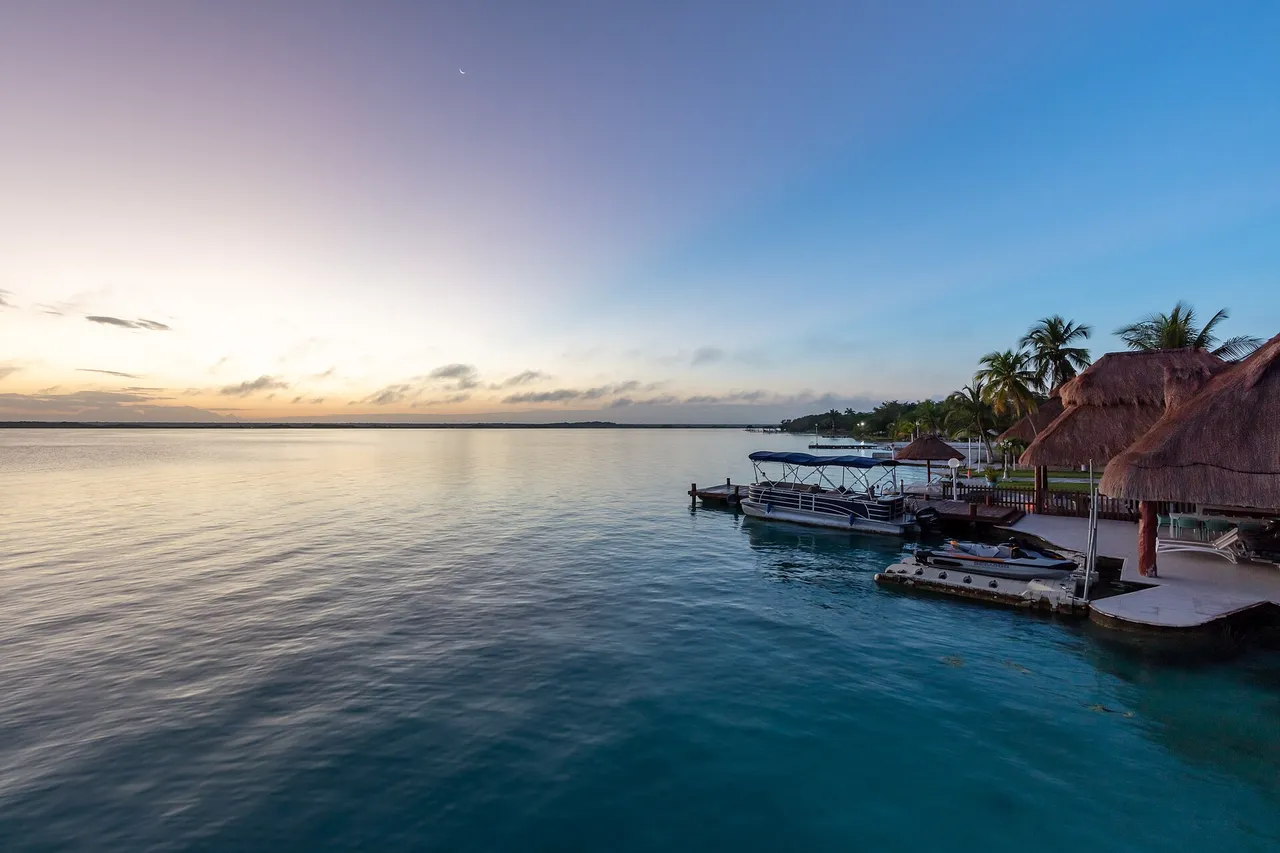
Fresh water in shades of blue that shift with the light, sailboats, kayaks and an 18th-century fort. What Bacalar doesn't have is proximity, which is why this guide is a plan for staying, not for going there and back.
It's about 340 kilometers. That's the number to keep in mind before anything else.
Bacalar is a town on a freshwater lagoon in southern Quintana Roo, famous for its bands of blue and turquoise and known as the Lagoon of Seven Colors. From Cancun it takes about 4 to 4.5 hours by car before stops, 5 h 20 min to 5 h 45 min on an ADO bus, or 4 h 42 min on the Tren Maya from the Cancún Aeropuerto station. Transport alone costs, each way, 540 to 700 pesos by bus or about 1,160 pesos by train at the international fare; a shared boat trip on the lagoon runs about 350 to 600 pesos.
A day trip? No. There are 12- to 14-hour tours, but that's 8 or 9 hours on the road for a few hours on the water. Bacalar is best with two or three nights, and one at the very least.
The numbers for a same-day round trip don't add up: even leaving before dawn, 8 to 9 hours go to the highway or the bus. What makes Bacalar special happens at the edges of the day: the lagoon is calmer and its colors sharper early in the morning, and the other great time to be on the water is sunset. On a day tour you arrive around midday, with the harshest light and the most boats, and leave just as the best part begins.
That's why we suggest a three-day plan below, with a trimmed version for two nights.
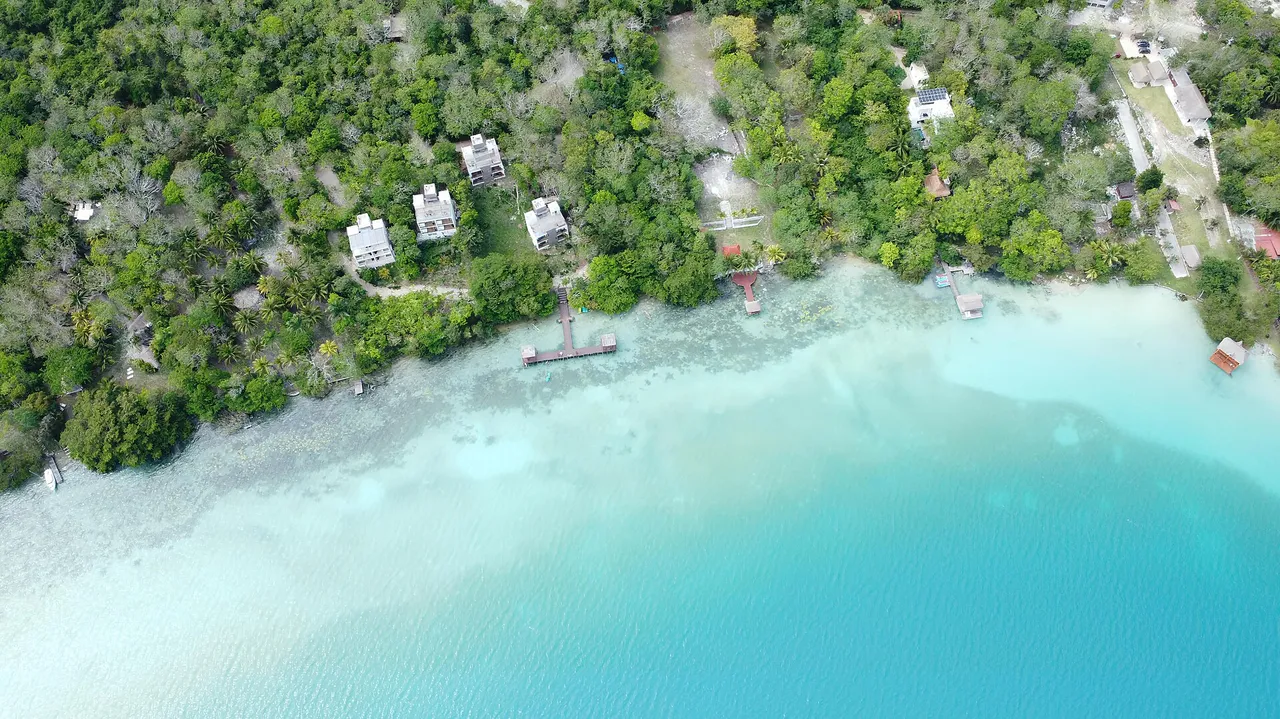
The lagoon's color depends mainly on two things: depth and the bottom. At the edges, where the water barely covers pale sand, it looks almost white and then pale turquoise; as it deepens, the blue intensifies. Cenotes open up inside the lagoon, like Cenote Negro and Cenote Esmeralda, where the water suddenly turns a very dark blue. Seen from above, that transition forms the bands that give the lagoon its name.
Light does the rest: the colors look best on sunny days. And rain can wipe them out. Heavy storms wash in sediment that can turn the water brown or green for weeks. The worst recent case followed Tropical Storm Cristóbal in 2020; in 2021 local press reported that the lagoon had recovered about 90% of its colors. If you're traveling in the rainy season or just after a storm, look at recent photos and reviews before you book.
| Option | Duration | Price each way | What to know |
|---|---|---|---|
| ADO / AU bus from downtown Cancun | 5 h 20 min – 5 h 45 min | ~MX$540–700 (by class; sources differ) | Departures almost hourly from 06:10 until after midnight, including overnight buses. |
| Tren Maya from Cancún Aeropuerto | 4 h 42 min | International Turista MX$1,163.50; Premier MX$1,396 | About 2 departures a day. The station is not inside the airport terminals. |
| Car | 4–4.5 h plus stops | Fuel; dropping a rental in Bacalar costs ~US$100 extra | Most flexible for cenotes, Los Rápidos and Chacchoben. |
| Day tour | 12–14 h day | Varies widely | Transport, boat ride, cenotes and sometimes the fort. Little real time on the lagoon. |
Prices checked in October 2026. Check before you go.
The simplest option: buses leave the ADO Cancún Centro terminal almost every hour, in ADO Primera, ADO and AU classes. Booking ahead on ado.com.mx usually gets you a discount. In Bacalar, taxis from the terminal to the lagoon don't use meters, so agree the fare before you get in (from about 110 pesos).
The train leaves from the Cancún Aeropuerto station, not from downtown and not from the air terminals themselves: a shuttle bus from the terminals costs about 35 pesos in cash. The ride to Bacalar takes 4 h 42 min. Published fares for foreign visitors are 1,163.50 pesos in Turista class and 1,396 in Premier; Mexican nationals and residents of the region pay less. One caveat: some sources claim the foreigner category was dropped in 2026, while October 2026 sources still list it, so confirm on the official booking system (reservas.ventaboletostrenmaya.com.mx) along with the schedule. Bacalar station is about 10 minutes from town; an official 25-peso connecting shuttle takes you to the ADO terminal.
Head south on federal highway 307 (Cancun–Chetumal) through Playa del Carmen, Tulum and Felipe Carrillo Puerto. It's paved and mostly straight, with no toll booths on this stretch, but with plenty of speed bumps (topes) and low limits through every town. Fill up before the stretches south of Tulum.
Leave Cancun early so you have the afternoon free. Drop your bags and head to the Balneario Ejidal, the public swimming area on the municipal waterfront, for a first dip. Stay for sunset: it's your first lesson in how the color changes with the light.
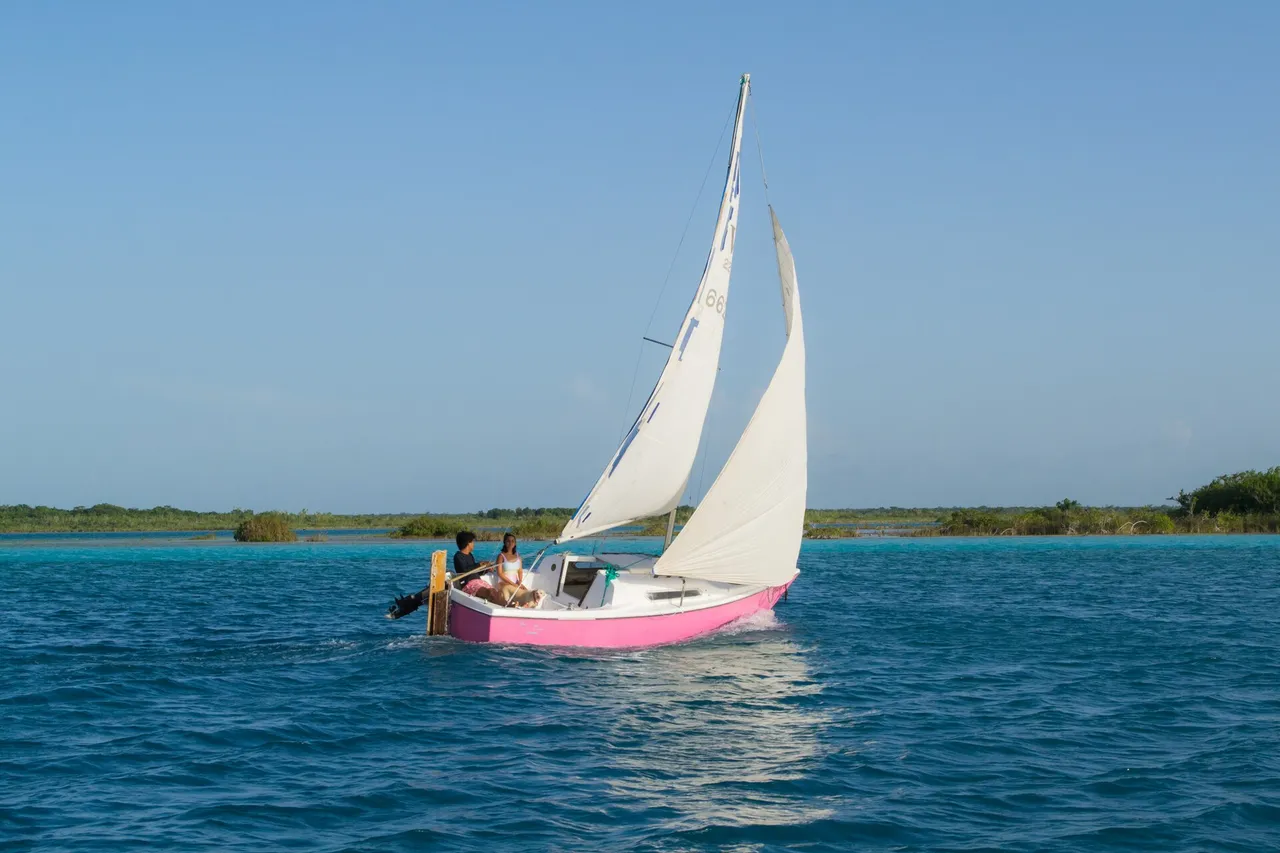
Take a boat or sailing trip first thing. The usual route passes the Canal de los Piratas, Cenote Negro, Isla de los Pájaros (seen from the boat, no landing) and Cenote Esmeralda, sometimes reaching Cocalitos. Cenotes Negro and Esmeralda charge no entry but can only be reached by water.
In the afternoon, visit the San Felipe fort and its Pirate Museum. It's closed on Mondays, so plan this day around your calendar.
Start with a sunrise kayak or paddleboard. Then pick one: Cenote Azul, right by highway 307 and separate from the lagoon; Los Rápidos, south of town, a channel with a current lined with stromatolites; or the Ichkabal archaeological site, about 40 km away, with free entry in 2026.
With two nights: arrive on day one, do the early boat trip on day two, visit the fort or Cenote Azul that afternoon, and keep the third day for the drive back.
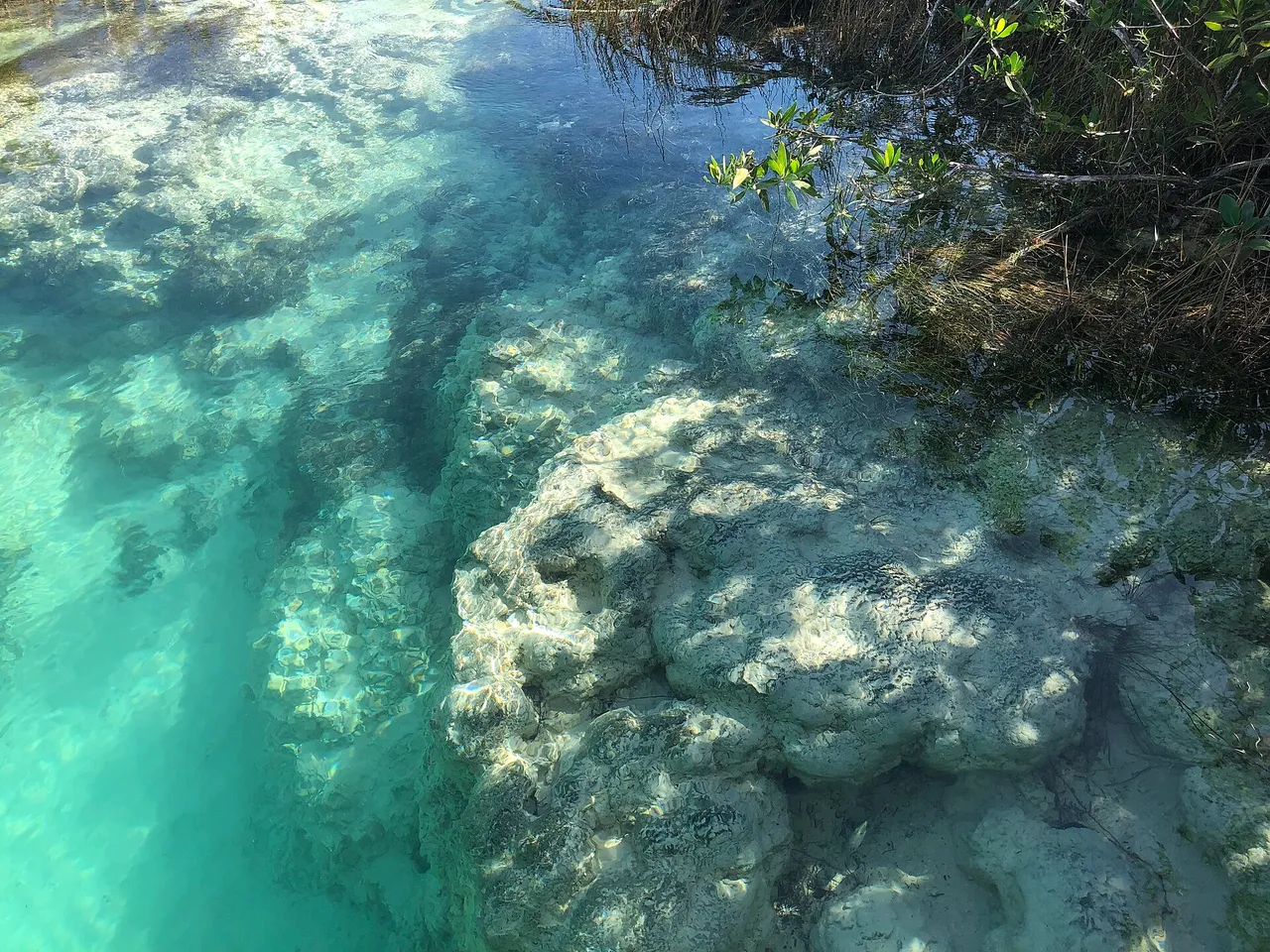
Those gray, rock-like formations along the shore are stromatolites: living structures built by microorganisms, among the oldest forms of life on the planet. Bacalar lagoon is one of the places where you can still see them, and they remain at risk despite conservation efforts.
Stepping, standing or sitting on them, or putting your things on them, is prohibited. Signs around the lagoon say so, and in 2025 the authorities were considering buoys to mark the most sensitive areas.
The other threat is whatever is on your skin. A BBC Mundo report recommends going into the water barefoot and without sunscreen or makeup, and locals ask visitors to skip sunscreen in the lagoon and cenotes and wear a UV shirt instead. If you really need sunscreen, use a mineral, biodegradable one applied well before swimming. At Los Rápidos and Cocalitos, where the stromatolites are most visible, always stick to the wooden walkways and docks.
You may read that boating in certain areas or above a certain speed is "already banned" in Bacalar. As of August 2025, the Port Captain said the General Navigation Rules for Bacalar Lagoon were still awaiting publication in Mexico's official gazette (DOF). In other words, they aren't law yet. What's proposed:
Even if they aren't binding yet, they're a good guide to behavior. It's also wrong to call the lagoon a "national park": the state-level Parque Ecológico Estatal Laguna de Bacalar, decreed in 2011, borders it, and the lagoon as a whole is not a federal protected area.
Fuerte de San Felipe stands over the lagoon in the middle of town. It dates from the 18th century and, according to tourism directories, was declared a historic monument in 1975 and has been a museum since 1983. Today it houses the Pirate Museum (Museo de la Piratería), run by the state culture institute. Entry is 110 pesos for visitors, 55 for locals and 30 for students, teachers and children; it opens Tuesday to Sunday from 09:00 to 19:00 and is closed on Mondays (September 2026 figures).
Ichkabal is a Maya archaeological site about 40 km from Bacalar. The head of INAH in Quintana Roo announced that entry will stay free throughout 2026. According to an INAH bulletin, it opens daily from 08:00 to 17:00, with last entry at 16:30. It's a good plan for a day when you'd rather stay dry, or to pair with the Chacchoben ruins.
| Item | Approx. price | Comment |
|---|---|---|
| Shared boat trip | MX$350–600 per person | Rough range; confirm in town |
| Shared sailboat | US$40–60 per person | Quieter, lower impact |
| Private boat or sailboat | From ~MX$3,000 per boat | About US$170 or more |
| Cenote Azul | MX$25–50 + life vest ~MX$50 | Cash only; roughly 10:00–18:00 |
| Cocalitos | MX$55–100 | Sources differ; often closed |
| San Felipe fort | MX$110 | MX$55 locals; closed Mondays |
| Ichkabal | Free | Throughout 2026 |
| Taxi terminal → lagoon | From ~MX$110 | No meter: agree first |
Prices checked in October 2026 against the most recent sources available; where they disagree we give a range. Check before you go. We left out Los Rápidos because we couldn't find a reliable entry price.
If you're a foreign tourist and already paid Visitax on arrival in Quintana Roo, Bacalar won't charge it again: it's paid once per visit to the state, not per destination. The official portal (visitax.gob.mx) doesn't clearly state the amount; press reports put it between 283 and 295 pesos. Your lodging may also add the environmental sanitation fee (Derecho de Saneamiento Ambiental) per room per night; we couldn't confirm the 2026 amount.
The dry season, December to April, and especially February and March, is when the lagoon looks its best. The rainy season runs roughly from May or June to October and overlaps with hurricane season (June 1 to November 30). Don't rule those months out, but keep your plans flexible and check recent photos.
One advantage over the coast: as a freshwater lagoon, Bacalar gets no sargassum. Mahahual, on the Caribbean coast to the east, can.
The rest of your luggage is covered in our Cancun packing list.
The most comfortable way down is to break the drive with a stop in Tulum, on the same highway 307. From Bacalar, the Chacchoben ruins are near the Limones-Chacchoben Tren Maya station and pair well with Ichkabal. Mahahual, on the Costa Maya, is the Caribbean beach escape.
Further south, Chetumal has the Museum of Maya Culture and a manatee sanctuary in its bay, and it's the crossing point into Belize. Compared with Holbox or Puerto Morelos, Bacalar is the calm, freshwater option: ideal for kayaking, sailing and resting.
There are 12- to 14-hour tours, but we don't recommend it: it's about 4 to 4.5 hours each way by car, or more than 5 by bus, for a few hours on the lagoon. Stay at least one night; two or three is ideal.
December to April, in the dry season, ideally on sunny days. Heavy rain can cloud the lagoon for weeks.
Shared trips run about 350 to 600 pesos per person; a shared sailboat, US$40 to US$60; a private boat, from about 3,000 pesos. These are rough ranges, so confirm in town.
Better not: wear a UV shirt and a hat. If you need sunscreen, use a mineral, biodegradable one applied well before swimming. And never step on or touch the stromatolites.
Yes. The Tren Maya runs from Cancún Aeropuerto station to Bacalar in 4 h 42 min. The international Turista fare is 1,163.50 pesos each way; check fares and times on the official booking system.
No. It's a freshwater lagoon. Sargassum affects the Caribbean coast, Mahahual for example.
No. It opens Tuesday to Sunday from 09:00 to 19:00 and is closed on Mondays. General entry is 110 pesos.