There's no bridge and no road onto Holbox: you travel to the port of Chiquilá and cross by ferry. Here's each leg explained, what it costs and why you'll almost certainly want to spend the night.
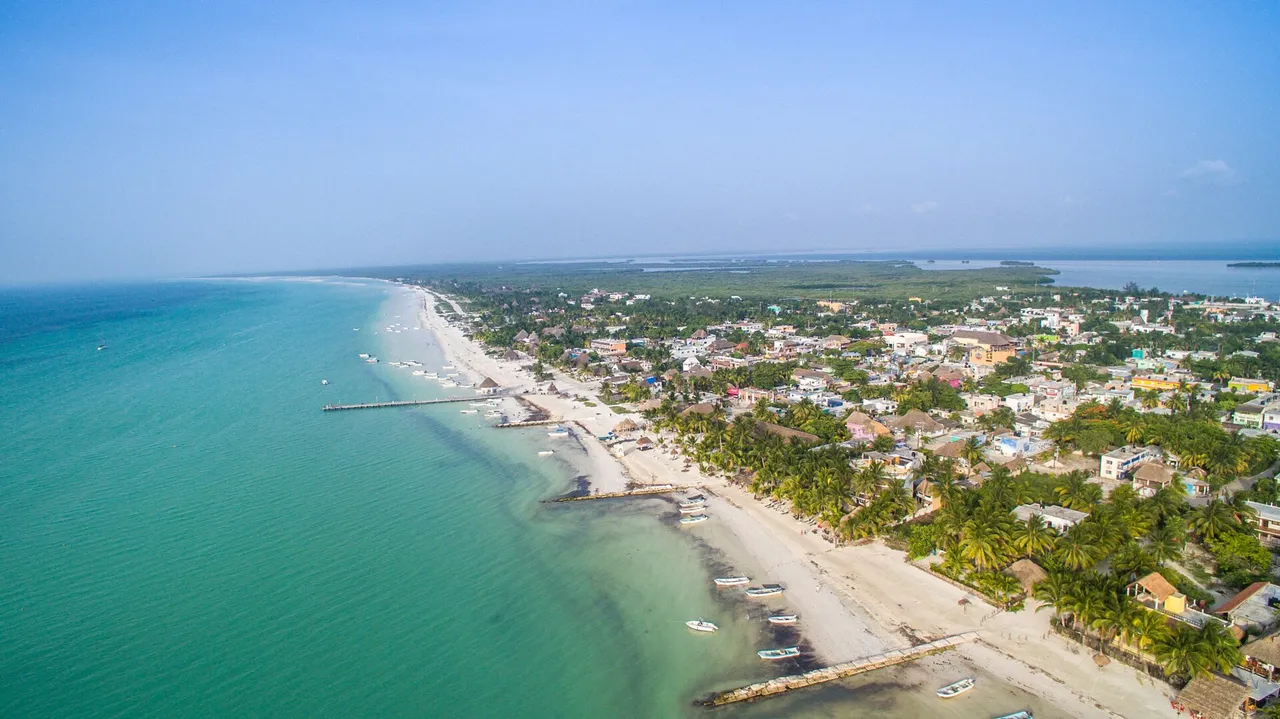
Holbox is a long, narrow island at the far northern tip of Quintana Roo, on the Gulf of Mexico side, inside the Yum Balam Flora and Fauna Protection Area. The streets are sand and there are no private cars. From Cancun airport it's about 144 km by road to the port of Chiquilá (2.5 to 3 hours), then a ferry crosses in roughly 25 minutes: 3.5 to 4.5 hours door to door.
The basics, per person and per leg, are the ADO bus from downtown Cancun (398 to 435 pesos) plus the ferry (330 pesos per adult). Does it work as a day trip? Technically yes, but you'd spend 6 to 8 hours in transit for 4 to 6 hours on the island. Our honest advice: one night minimum, two or three if you can.
With Holbox, getting there isn't a formality: it's a big part of the trip, and planning it well is the difference between a relaxed visit and a rushed one.
Head west out of Cancun on federal highway 180, then turn north onto highway 5 through Kantunilkín until the road ends at Chiquilá. If you take the free road instead of the toll highway, add 30 to 60 minutes.
The ADO stop is about a five-minute walk from the pier. If you drive, the car stays here: guarded long-stay lots charge around 100 pesos a day. Several blocks before the docks you'll see people waving drivers into their lots; you don't have to stop at the first one. Pick a lot near the terminal and ask for a dated receipt.
The boat takes about 25 minutes, a bit longer when it's windy. On the Holbox side, golf-cart taxis meet every ferry.
| Option | Time to Chiquilá | Approx. cost | Good to know |
|---|---|---|---|
| ADO bus from downtown Cancun | 2 h 35 min | MX$398–435 one way | About 3 direct departures a day. No direct bus from the airport. |
| Own or rental car | 2.5–3 h from the airport | Fuel + parking (~MX$100/day) | Flexible timing; the car stays in Chiquilá. |
| Shared shuttle | 2–2.5 h | Up to ~MX$1,000 (US$60) per person | Leaves from the airport (Terminal 2). |
| Private transfer | ~2.5 h | US$80–120 per person via hotels, or ~US$180 per vehicle (up to 4) | Easiest for families. |
| Organized day tour | ~12-hour day | Varies by operator | Includes transport, ferry, golf-cart ride and lunch; little free time. |
Prices checked in October 2026. Check before you go: fares and schedules change often.
The ADO leaves from the Cancún Centro terminal (Av. Tulum at Av. Uxmal). For October 21, 2026 the published departures were 08:15, 12:00 and 15:15, but other booking sites list different times, so confirm on ado.com.mx or the ADO app, which often has discounts for booking ahead. There's no direct bus from the airport: take the ADO downtown first (145 to 170 pesos, about an hour). More options in our guide to Cancun airport transportation.
The bus's weak spot is the return: we couldn't find a reliable 2026 timetable for Chiquilá to Cancun. Ask at the Chiquilá ticket office when you arrive, not on the day you leave. There are also colectivo minibuses from downtown Cancun for about 250 pesos, but we couldn't confirm where they depart from, so we don't suggest them for a first visit.
Two companies, 9 Hermanos and Holbox Express, charge the same fare and take the same time. They alternate so that a boat leaves roughly every 30 minutes.
| Direction | First boat | Last boat |
|---|---|---|
| Chiquilá → Holbox | 06:00 | 21:30 |
| Holbox → Chiquilá | 05:00 (then from 06:00) | 20:30 |
October 2026 schedule. On December 24 and 31 the last boat is 20:30 from Chiquilá and 19:30 from Holbox; on December 25 and January 1 the first boat is at 07:00.
The fare is 330 pesos per adult, one way; children up to 8 pay about 160 to 170 pesos and babies up to 2 ride free. If you see 300 or 220 pesos online, those are old fares. There are no reservations: you buy at the windows on the pier, next to the small supermarket. ADO passengers are sometimes offered ferry tickets on the bus at the normal price; other than that, don't buy from anyone on the street.
The windows take cards, but there are reports of a surcharge of around 50 pesos and of card terminals losing signal, so carry 350 to 400 pesos in cash per person for the ferry. In bad weather the service is suspended, and both companies post updates on their social media.
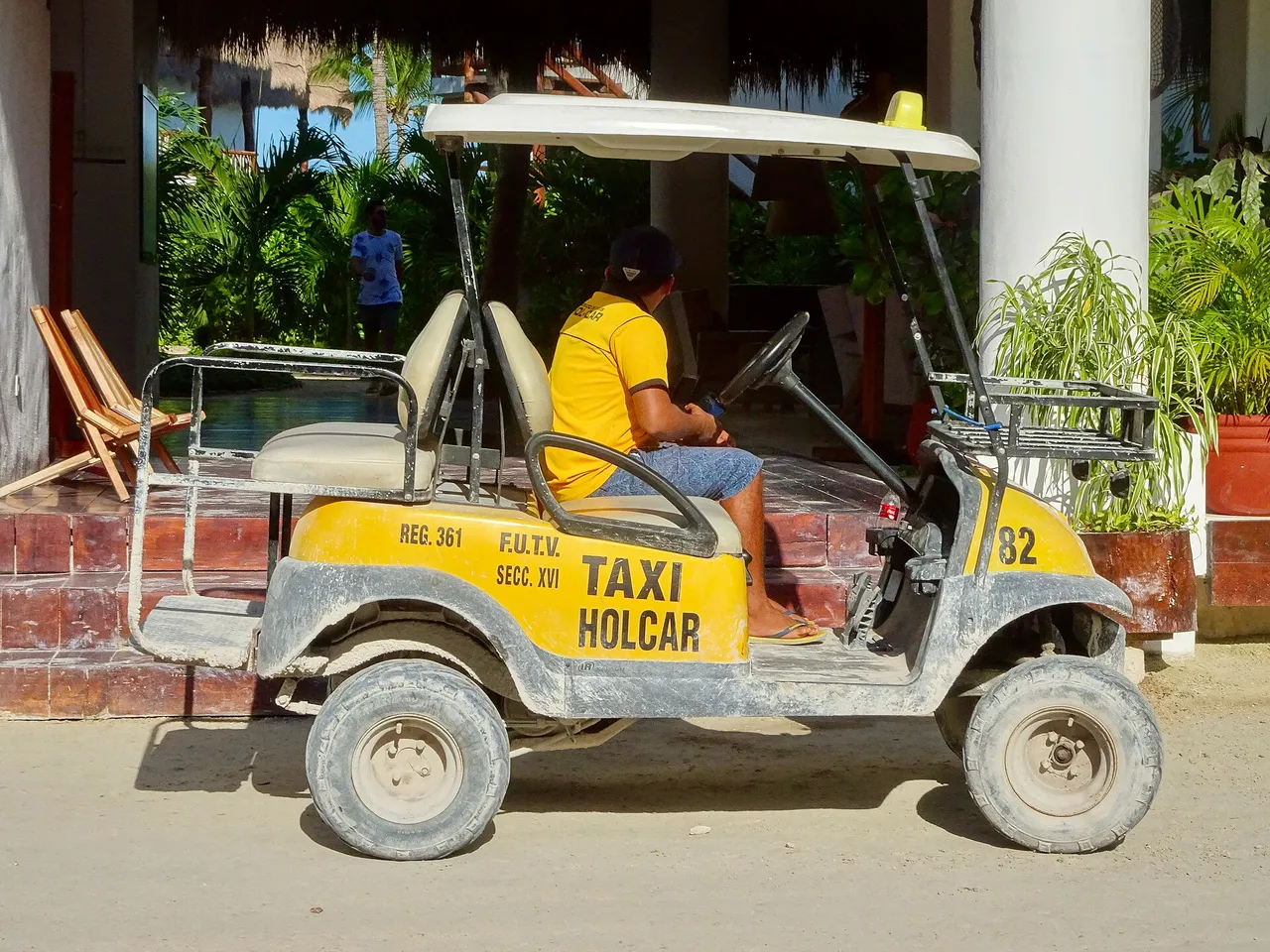
What you'll see on the streets are golf carts (many work as taxis), bicycles and the odd work vehicle. The town is easy to walk, and for Punta Cocos or Punta Mosquito a bike is often a better idea than renting a cart. The streets are sand and flood after heavy rain, so sandals beat sneakers.
If you rent a cart, agree the full price before you set off and refuse charges that appear later; there are reports of made-up fees for "stuck in the sand" or "cleaning". We don't publish a rental rate because we couldn't find a reliable 2026 source.
Out: 08:15 ADO → Chiquilá around 10:50 → ferry → on the island around midday.
Back: last boat at 20:30, with no confirmed Chiquilá–Cancun bus times.
Result: 6 to 8 hours of travel for 4 to 6 hours on the island.
It can be done, especially on a tour that handles the transport, but a same-day round trip takes away exactly what makes Holbox special: sunset at Punta Cocos or Punta Mosquito (right when you'd be rushing for the ferry), bioluminescence, which only shows at night, and whale-shark tours, which leave early in the morning. One night changes everything; with two or three, Holbox stops being a race.
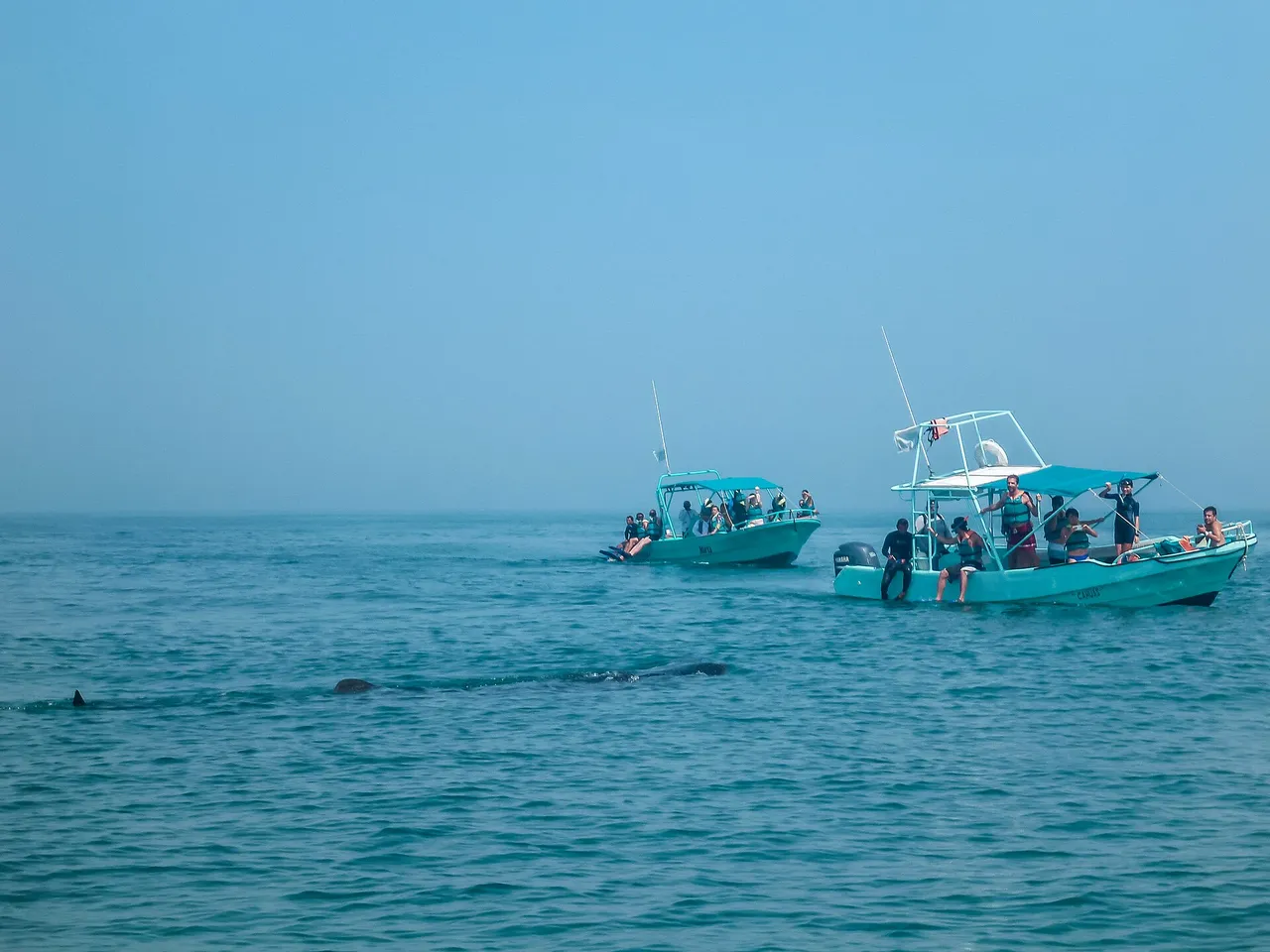
From May 15 to September 17, CONANP-regulated permits allow swimming with whale sharks in the waters of the Whale Shark Biosphere Reserve and the Yum Balam area. July and August are the most reliable months; sightings in May and September are patchier. Numbers also swing a lot from year to year: fewer than 400 sharks were counted in 2025, while more than 800 were expected for 2026, according to the newspaper Por Esto. From Holbox, a tour costs US$180 to US$200 per person (July 2026 figures).
Rules from the management plan as reported in the press; we couldn't find the current 2026 official text.
Book directly or through your hotel the day before, and check that the guide is certified. You can swim with the same sharks from Isla Mujeres or Cancun, since it's the same aggregation area; we cover that in our Isla Mujeres guide.
On some nights, in shallow spots like Punta Cocos, the water throws off blue sparks when you move it: that's bioluminescence from microscopic organisms. It can be seen for much of the year (the months usually named as best run from April to November), but it needs real darkness, so moonless nights are the ones to aim for. Kayak or paddleboard outings last an hour and a half to two hours. There's no published rulebook, but these habits make a difference:
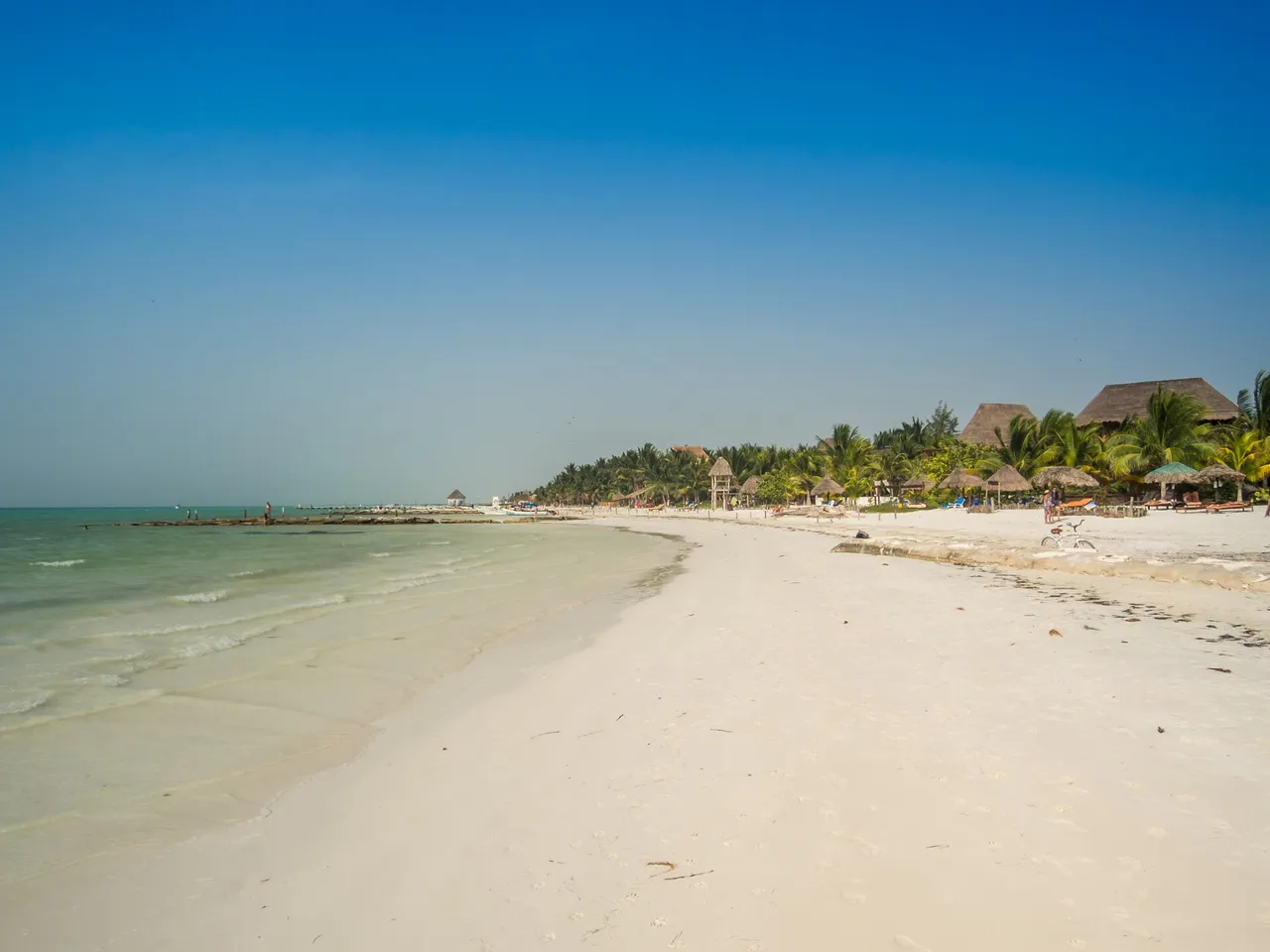
Punta Mosquito is a sandbar where you walk in ankle-deep water among birds, and a good sunset spot. Keep your distance from the flamingos and don't chase birds for a photo. The beach in front of town is your everyday beach: white sand, shallow water and palapas.
The Three Islands tour (about 3.5 hours by boat) visits Isla Pasión, Isla Pájaros and the Yalahau spring. At Isla Pájaros the birds are watched from a boardwalk: walking on the island is prohibited. Entry to Yalahau costs 200 pesos and isn't always included, so ask. A shared tour is around US$41 and a private one starts at US$260 for up to 8 people; local press reports that boatmen at the pier charge about 450 pesos directly, and that hotel commissions push prices up. Mangrove kayaking and the town's street murals round out an afternoon.
| Item | Approx. price | Note |
|---|---|---|
| ADO downtown Cancun → Chiquilá | MX$398–435 | One way |
| ADO airport → downtown Cancun | MX$145–170 | If you're flying in |
| Parking in Chiquilá | ~MX$100 per day | Ask for a dated receipt |
| Ferry, adult / child up to 8 | MX$330 / ~MX$160–170 | One way; under 2 free |
| Three Islands tour | ~US$41 shared | ~MX$450 at the pier, per local press |
| Yalahau spring | MX$200 | Not always included in the tour |
| Whale-shark tour | US$180–200 | May 15 to September 17 |
Prices checked in October 2026 against the most recent sources available. Check before you go.
For one person on the ADO and ferry, round trip, transport comes to about 1,460 to 1,530 pesos. If you're a foreign tourist, Visitax is paid once per visit to Quintana Roo, not per destination, so Holbox doesn't charge it again. The official portal, visitax.gob.mx, doesn't clearly publish the amount (press reports put it between 283 and 295 pesos); pay only there, because the state government has warned about some 20 fake sites. Separately, an environmental sanitation fee (Derecho de Saneamiento Ambiental) is charged per room per night through your lodging; we couldn't confirm the 2026 amount. A per-visitor charge at the Chiquilá port was tried and then suspended, and we found none in force in 2026 for day visitors.
For dry, sunny weather, November to May. For whale sharks, June to September, accepting heat, mosquitoes and storm risk: hurricane season runs from June 1 to November 30. In winter, cold fronts known as "nortes" can cancel ferries on some days.
Sargassum matters much less here because Holbox faces the Gulf. In the state environment ministry's report for October 9, 2026, Chiquilá and the ferry pier had none, and Holbox Centro, Punta Cocos and Punta Mosquito were at a low level, while several Caribbean beaches were rated excessive. More background on our Cancun sargassum page.
For everything else, our Cancun packing list works for the island too.
The natural partner is Valladolid: the bus from Chiquilá takes about 2 hours 40 minutes, and from there you have cenotes and Ek Balam without going back through Cancun. Isla Contoy is nearby, but its tours mostly leave from Cancun and Isla Mujeres. Compared with the other escapes in the area, Holbox is the "remote, barefoot island": more logistics than Puerto Morelos, less driving than Bacalar.
Technically yes, but it's about 3 to 3.5 hours each way by road and ferry, and you miss the sunset, the bioluminescence and the morning tours. If you only have one day, an organized tour is the least complicated way. Ideally, stay one to three nights.
330 pesos per adult, one way (October 2026); children up to 8 pay about 160 to 170 pesos. 9 Hermanos and Holbox Express charge the same. Tickets are sold at the Chiquilá pier, no reservation needed.
Roughly every 30 minutes: from Chiquilá between 06:00 and 21:30, and from Holbox between 05:00 and 20:30. It can be suspended in bad weather.
Very few, and they often run out of cash; Chiquilá has no reliable one. Bring pesos from Cancun.
No. Leave it in a guarded lot in Chiquilá (about 100 pesos a day) and get around the island on foot, by bike or by golf cart.
May 15 to September 17, with July and August the best months. A tour costs US$180 to US$200 per person.
We found no charge in force in 2026 for day visitors. Foreign tourists pay Visitax once per visit to Quintana Roo. If you sleep on the island, your lodging may add the per-night environmental sanitation fee.