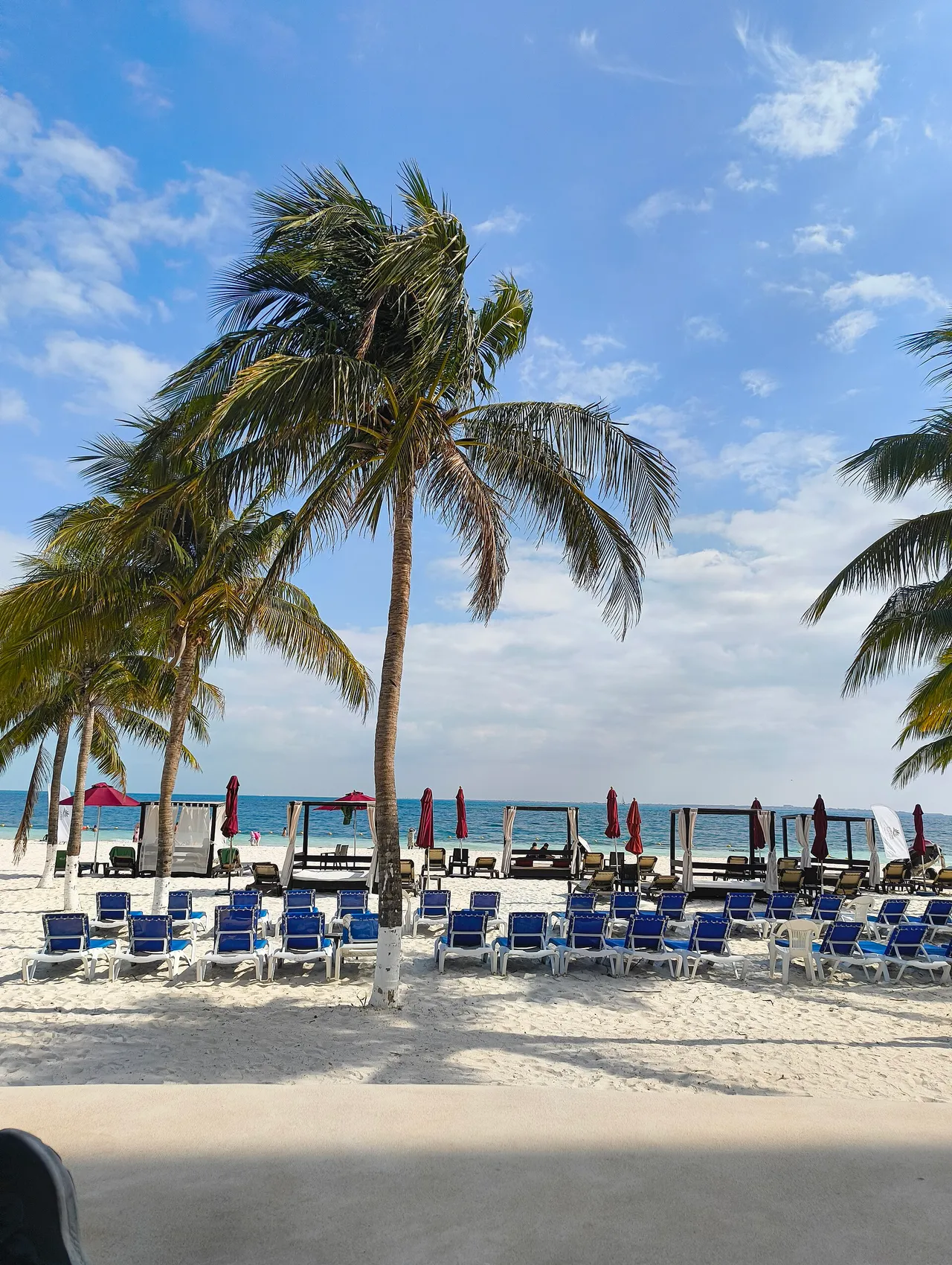
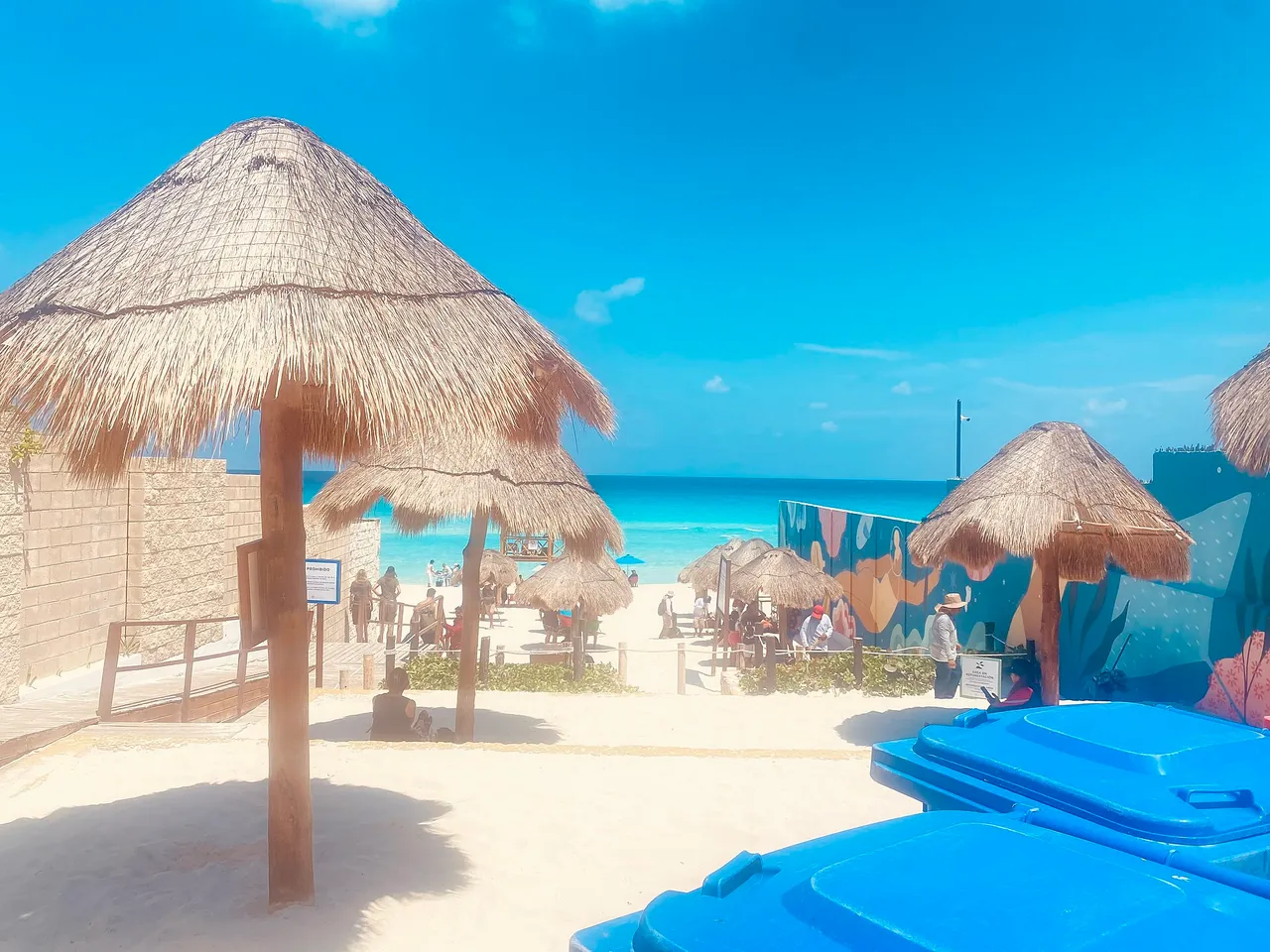
One thing the law says plainly: there is no such thing as a private beach in Cancun. Everything else (drinking, smoking, flying a drone, walking at night) depends on which rule applies and who enforces it. Here we separate what comes from an actual legal text from what the press merely repeats, and we tell you when we found nothing to back a claim up.
None: the sand and the 20 m of adjoining dry land are common-use public property
Alcohol
Local press says it's tolerated if not in glass; we couldn't find the regulation's text
Drones
Registration with the AFAC is required; we found no blanket ban on the sand
Bonfires, camping, motorbikes
The municipality lists them as prohibited
Dogs
Kept off July to November, per 2026 press
Sea turtles
Touching them or taking eggs is a federal crime: 1 to 9 years in prison
Walking at night
We found no general law against it; there are lighting rules during nesting
If you're blocked
Document it and report to Profepa: 800 PROFEPA
Why no beach in Cancun is private
It starts with the General Law of National Assets. Article 7 lists sea beaches (what the tide covers and uncovers) and the maritime-terrestrial federal zone among common-use assets, and Article 119 defines the latter, where there's a beach, as a 20-meter strip of walkable dry land next to the sand. Behind it sits Article 27 of the Constitution, which gives the Nation ownership of the territorial sea. In plain terms: a hotel's property ends where that strip begins, however far its lawn seems to run toward the water.
Article 8 adds that access to beaches and the adjoining federal zone may not be inhibited, restricted, obstructed or made conditional, except in cases set by regulation. That paragraph arrived with the reform published on October 21, 2020, which also created Article 154, the one that fines anyone who blocks the way.
Playa Marlín, one of the seven public beaches the municipality administers.Photo: Dnnna-10 · CC BY-SA 4.0
What a hotel can do, and what it can't
A public beach doesn't make the lobby or the sunbeds public. A hotel or club holding a concession can run its stretch commercially (charging for loungers, umbrellas or food and drinks) and pays fees to the State for it, under Article 127. What it can't do is shut the way through or demand you buy something to sit on the sand. Our reading, which isn't legal advice: as long as you don't use its loungers or services, the strip of sand is as much yours as a guest's.
The route to the sand is a separate matter. Where no public road reaches the beach, Article 127 requires neighboring landowners to allow passage along the accesses Semarnat agrees with them, with compensation, as a right of way. That guarantees an entrance exists; it isn't a right to stroll through any hotel's lobby when a public access is nearby. Use the ones on our list of public beaches and on the map; to see how the sand looks in front of the resorts, there's the page on beaches in front of hotels.
In April 2021, according to the local outlet Ruptura 360, the Zofemat, together with the state prosecutor's office, police and the National Guard, removed fences, loungers and a wooden structure a beach club had put up on Playa Gaviota Azul.
Reforms in limbo. In 2021 the Senate approved a bill extending the beach ten meters inland; in October 2025 the Chamber of Deputies approved another that would create a National Registry of Beach Accesses and ban entry fees, and in December the Senate's Tourism Committee backed it. We found no confirmation that either has been published in the Official Gazette, so we describe the law as we know it to be in force; check the current text.
The rules at a glance
Activity
Verdict
Basis
Entering any beach
Yes, free
General Law of National Assets, arts. 7, 8, 119, 154
Alcohol on the sand
Tolerated if not in glass, per press
Regulation reported by Ruptura 360 (2023); text not located
Smoking
No clear rule
Sources differ
Loud music
A misdemeanor if it disturbs others
State police and good-government law, art. 6, sec. IX
Drones
With registration and caution
AFAC; NOM-107-SCT3-2019
Camping, bonfires, motorbikes
No
Municipality, per local press
Dogs
No, July to November
2026 press; NOM-162, item 5.4.6
Fishing from shore
Yes, no permit
General Fisheries Law, art. 69
Touching turtles, hatchlings or eggs
Never
Federal Penal Code, art. 420; NOM-162
Walking at night
No general ban found
NOM-162 (light, vehicles, animals)
Selling on the sand
Not without authorization
State misdemeanor law, art. 6, sec. VII
Where it says "per press" we couldn't read the original rule: treat it as a hint, not a legal citation.
Drinking, smoking and music
Alcohol and glass
There are two layers, and they don't fully match. The solid one is state law: Quintana Roo's Organic Law of Justice on Police and Good Government Misdemeanors lists, in Article 6, section VI, "drinking beer or intoxicating beverages on public roads," punishable by a fine or up to 36 hours of arrest. Whether a beach counts as a public road, the law doesn't say, and its last reform dates from 2013.
The other is a regulation for the seven public beaches that the press cites: in November 2023, Ruptura 360 reported that you may bring alcoholic drinks as long as they aren't in glass but in plastic, cans or other material. We couldn't locate the text, so this is a reported practice, not an article you can cite. The prudent version: a few cans, no glass, and no swimming afterward. At Delfines, Marlín and Chac Mool lifeguards work 9:00 to 17:00; after that nobody is watching the water.
Smoking and music
On tobacco the sources contradict each other: some outlets reported that federal smoke-free rules cover beaches, but the law defines "100% smoke-free" for enclosed places, and we found no Cancun provision about the sand. With no known penalty, just don't smoke next to children and don't leave butts behind, since they take years to break down. Music is similar: we found no volume limit for beaches, but the same misdemeanor law, Article 6, section IX, penalizes noise that disturbs other people's peace.
Drones: the rule almost nobody knows
The AFAC, Mexico's civil aviation authority, requires you to register a drone before flying it, by emailing a form and an ID to rpas@afac.gob.mx, and NOM-107-SCT3-2019 sets the operating requirements. For recreational use, according to references to the Civil Aviation Law's regulations (we couldn't open the official text), conditions include a maximum weight of 2 kg and proof of lawful stay in the country.
Three warnings matter more than the paperwork. Much of the hotel zone is close to the airport, and we couldn't confirm an official radius. At Punta Nizuc and the west coast of Isla Mujeres there's a national park, and protected areas usually require permission from their administration (ask CONANP). And a drone over a turtle or hatchlings can count as harassment, which NOM-162 forbids (item 6.9.3.1). Some English-language guides say foreigners can't fly drones in Mexico; we couldn't confirm that from an official source, so if you're bringing one, ask the AFAC before the trip.
Camping, bonfires, motorbikes and dogs
The municipal government has said, according to local press, that the main prohibitions on its beaches are bringing in scooters, bringing pets, lighting bonfires and camping. We didn't find the exact article and the report has no clear date, but it matches what you see every day.
On dogs there's a July 2026 report: authorities reportedly formalized a ban on pets on Cancun's beaches from July to November to protect nests; it cites no regulation and no exceptions. NOM-162 backs it up: during nesting season it requires keeping vehicles and "any animal that could disturb or harm females, nests and hatchlings" off nesting beaches. Playa Coral is the one usually named as dog-friendly (more in our pet-friendly beaches guide); even so, confirm the seasonal restrictions.
Turtles and night walks: where the rule comes from
If someone told you "you can't set foot on the beach at night," they were almost certainly talking about turtles. Cancun mostly gets green and loggerhead turtles; the season starts around late April, hatchlings keep emerging into the fall, and dates shift every year. The municipal Ecology Department runs a protection program year-round; in 2025 it reported more than 3,500 nests in 43 corrals.
We found no law, federal or municipal, banning anyone from walking a public beach in Cancun after a certain hour. What does exist:
Light: NOM-162-SEMARNAT-2011 calls for removing or redirecting any installation that casts light toward a nesting beach at night, with fixtures aimed down (5.4.4 and 5.4.5). Hatchlings steer toward the brightest horizon; white light sends them inland.
Vehicles and animals: kept off the beach during the season, except monitoring vehicles (5.4.6).
Objects: remove anything from the sand that could trap or entangle a turtle, like forgotten chairs or nets (5.4.3).
Handling: no handling, touching or disturbing turtles; on guided walks, groups of up to 10, no flashlights or flash, and 10 m from the female (6.9.3).
The municipality sums it up for visitors: don't touch, and no flash or white light. The norm binds mostly those who manage the beach; for you, the practical effect is to carry little light (red is best, or none) and keep your distance. If you see a turtle, call 9-1-1 or tell Ecology, the Zofemat or the hotel, and don't try to help it: Profepa has investigated videos of people picking up hatchlings in Quintana Roo. There's also a less romantic reason to skip the sand at night: with no lifeguards and little visibility, the sea is a risk all by itself.
Flags, fishing and vendors
Flags. The municipality's Aquatic Safety, Lifesaving and Rescue Regulation (2018 reform) sets three colors in Article 19: green, safe to enter; yellow, caution; red, unfavorable conditions and no entry in that area. Lifeguards can bar you from the water (art. 27). Its fines hit businesses, not swimmers, but ignoring red is the rule that costs the most lives. Langosta and Ballenas have no permanent lifeguards. See the sea alerts and our safety guide.
Fishing. Under Article 69 of the General Law on Sustainable Fisheries and Aquaculture, people who fish for sport from land need no permit, but must use authorized gear and respect minimum sizes and catch limits. An outlet from another state says a license is required; if in doubt, ask CONAPESCA. Protected areas have their own rules.
Vendors. The state misdemeanor law penalizes offering goods on public roads in unauthorized places (art. 6, sec. VII), and the municipality runs joint operations with the Zofemat against street vending on the beach. Under those texts, buying doesn't make you an offender, though there are no regulated prices; a firm, friendly "no, gracias" is enough.
If you're denied access to the beach
It happens more than it should: someone tells you "this beach is for guests only." This is what works, in order:
1. Don't argue: ask who they are and what authority they're invoking. A private guard isn't an authority.
2. Document: photo or video of the sign or the person, date, time, Boulevard Kukulcan kilometer marker and the hotel or club's name.
3. Go around: use a nearby public access. If anyone threatens or hits you, call 9-1-1.
4. Report to Profepa, which the press points to for access complaints (Article 154 doesn't say who imposes the fine).
Profepa's official channels: the toll-free line 800 PROFEPA (800 776 3372), where a phone complaint must be ratified within three business days; email denuncias@profepa.gob.mx; the online form at profepa.gob.mx; and the Citizen Services desk at the state office, 9:00 to 18:00. Include your name, address and email, what happened, the exact location and, if you can, photos or video; you can ask that your identity be kept confidential.
The municipal Zofemat administers seven beaches, but we found no official phone number published in the sources we checked; look for the current channel at cancun.gob.mx. Be wary of WhatsApp numbers or social accounts claiming to be the Zofemat.
Fines and penalties: who pays what
Conduct
Penalty
Source
Blocking beach access (adjoining owners and concession holders)
3,000 to 12,000 UMA, about MX$352,000 to MX$1.41 million; concession revoked on repeat offense
LGBN, art. 154; 2026 UMA of MX$117.31 (INEGI)
Harming or capturing a sea turtle; collecting its eggs
1 to 9 years in prison and 300 to 3,000 day-fines; more in a protected area or for commercial purposes
Federal Penal Code, art. 420
Drinking in public, disruptive noise, selling where unauthorized
Misdemeanor: fine or up to 36 hours' arrest; no amount located for Cancun
State misdemeanor law, art. 6
Business without lifeguards or flags
50 to 200 UMA the first time; 501 to 1,000 if serious
Municipal aquatic safety regulation, art. 34
Smoking, drones, bonfires, camping
No published amount that we could find
No official source
In November 2025 a Chamber committee proposed raising the penalties in Article 420; we couldn't confirm that it is in force.
Sources and verification
Data verified: November 2026. We prioritize official texts; where only the press was available, we say so.
Not confirmed: the text of the regulation allowing alcohol without glass, the municipal article on bonfires and camping, the instrument behind the pet restriction, whether the 2021 and 2025 reforms changed the 20 m, the drone restriction radius, the amounts of Cancun's misdemeanor fines and an official Zofemat phone number. This isn't legal advice. If you spot an error, write to us with the source.
Beach rules FAQ
Are there private beaches in Cancun?
No. Beaches and the 20-meter federal zone are common-use property. A hotel can reserve its loungers but can't block the way to the sand; whoever does risks a fine of 3,000 to 12,000 UMA.
Can you drink alcohol on Cancun's beaches?
The press says it's tolerated if the container isn't glass, but we couldn't find the regulation. State law penalizes drinking on public roads and doesn't say whether sand counts.
Can you smoke on the beach in Cancun?
We found no express ban for the sand and no published penalty, and sources contradict each other. The sensible approach: away from children, and take your butts with you.
Can you fly drones on Cancun's beaches?
We located no blanket ban, but the drone must be registered with the AFAC, and there are restrictions near the airport, in protected areas and over turtles.
Can you camp or light bonfires on Cancun's beaches?
No. The municipality lists them among the main prohibitions, along with scooters.
Can I bring my dog to a beach in Cancun?
Not from July to November, according to 2026 press, and NOM-162 requires keeping animals off nesting beaches. Check Playa Coral's current rules before you go.
Why can't you walk on the beach at night?
We found no general law that says so. What exists protects nesting turtles: no white light or flash, no vehicles, and no approaching them. Also, there are no lifeguards at night.
Can a hotel stop me from reaching the beach?
It can't block or condition passage to the public sand. It can, though, refuse to let you through its lobby if there's a public access nearby. If you're blocked, document it and report to Profepa.
Can you fish from the shore in Cancun?
Yes, with no permit under Article 69 of the General Fisheries Law, using authorized gear and respecting sizes and limits.
What's the penalty for touching a turtle or taking eggs?
It's a federal crime: 1 to 9 years in prison and 300 to 3,000 day-fines, with more in protected areas.